1,830 posters, 67 videos, 75 audios, 29 topics, 22 sessions, 4,727 authors, 1,697 institutions
ePostersLive by SciGen Technologies S.A. All rights reserved.
RCOG World Congress 2023
June 12 - 14, 2023 | London, UK

EP.0021
Maternal and Perinatal Outcomes following Mid-trimester Pre-term Prelabour Rupture of Membranes (PPROM)
Poster Presenter
Authors
Affiliations
Part of Topic
High Risk Pregnancy
Maternal and Perinatal Outcomes following Mid-trimester Pre-term Prelabour Rupture of Membranes (PPROM).
Introduction:
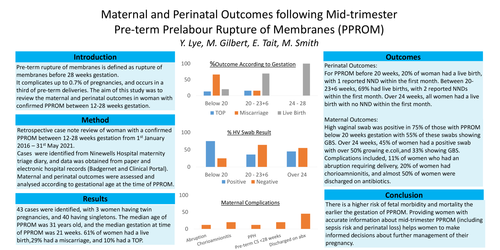
Pre-term rupture of membranes is defined as rupture of membranes before 28 weeks gestation. It complicates up to 0.7% of pregnancies, and occurs in a third of pre-term deliveries. The aim of this study was to review the maternal and perinatal outcomes in woman with confirmed PPROM between 12-28 weeks gestation.
Method:
Retrospective case note review of woman with a confirmed PPROM between 12-28 weeks gestation from 1st January 2016 – 31st May 2021. Cases were identified from Ninewells Hospital maternity triage diary, and data was obtained from paper and electronic hospital records (Badgernet and Clinical Portal). Maternal and perinatal outcomes were assessed and analysed according to gestational age at the time of PPROM
Results:
43 cases were identified, with 3 women having twin pregnancies, and 40 having singletons. The median age of PPROM was 31 years old, and the median gestation at time of PPROM was 21 weeks. 61% of women had a live birth,29% had a miscarriage, and 10% had a TOP.
Perinatal Outcomes:
For PPROM before 20 weeks, 20% of woman had a live birth, with 1 reported NND within the first month. Between 20-23+6 weeks, 69% had live births, with 2 reported NNDs within the first month. Over 24 weeks, all women had a live birth with no NND within the first month.
Maternal Outcomes:
High vaginal swab was positive in 75% of those with PPROM below 20 weeks gestation with 55% of these swabs showing GBS. Over 24 weeks, 45% of women had a positive swab with over 50% growing e.coli,and 33% showing GBS.
Complications included, 11% of women who had an abruption requiring delivery, 20% of women had chorioamnionitis, and almost 50% of women were discharged on antibiotics.
Conclusion:
There is a higher risk of fetal morbidity and mortality the earlier the gestation of PPROM. Providing women with accurate information about mid-trimester PPROM (including sepsis risk and perinatal loss) helps women to make informed decisions about further management of their pregnancy.