1,830 posters, 67 videos, 75 audios, 29 topics, 22 sessions, 4,727 authors, 1,697 institutions
ePostersLive by SciGen Technologies S.A. All rights reserved.
RCOG World Congress 2023
June 12 - 14, 2023 | London, UK

PP.0087
Vitamin B12 deficiency or HELLP syndrome ? – A Clinical Dilemma
Poster Presenter
Authors
Affiliations
Part of Topic
Labour Ward Management
Objective
Atypical presentation of vitamin B12 deficiency and the features mimicking one of the life-threatening obstetric emergencies – HELLP syndrome.
Case report
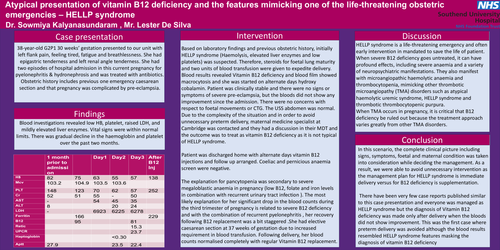
38-year-old G2P1 30 weeks’ gestation presented to our unit with left flank pain, feeling tired, fatigue and breathlessness. She had epigastric tenderness and left renal angle tenderness. Blood investigations revealed low HB, platelet, raised LDH, and mildly elevated liver enzymes. Vital signs were within normal limits
Hb-57(63,75,83) Platelet- 57(62,123,148) LDH – 6278 B12- 81 Haptoglobin - <0.30 AST- 35 ALT- 24
There was gradual decline in the haemoglobin and platelet over the past two months. She had two episodes of hospital admission in this current pregnancy for pyelonephritis & hydronephrosis and was treated with antibiotics. Obstetric history includes previous one emergency caesarean section and that pregnancy was complicated by pre-eclampsia.
Based on laboratory findings and previous obstetric history, initially HELLP syndrome (Haemolysis, elevated liver enzymes and low platelets) was suspected. Therefore, steroids for foetal lung maturity and two units of blood transfusion were given to expedite delivery. Blood results revealed Vitamin B12 deficiency and blood film showed macrocytosis and she was started on alternate days hydroxy cobalamin. Patient was clinically stable and there were no signs or symptoms of severe pre-eclampsia, but the bloods did not show any improvement since the admission. There were no concerns with respect to foetal movements or CTG. The USS abdomen was normal. Due to the complexity of the situation and in order to avoid unnecessary preterm delivery, maternal medicine specialist at Cambridge was contacted and they had a discussion in their MDT and the outcome was to treat as vitamin B12 deficiency as it is not typical of HELLP syndrome.
Patient was discharged home with alternate days vitamin B12 injections and follow up arranged. Coeliac and pernicious anaemia screen were negative.
Discussion
HELLP syndrome is a life-threatening emergency and often early intervention in mandated to save the life of patient. When severe B12 deficiency goes untreated, it can have profound effects, including severe anaemia and a variety of neuropsychiatric manifestations. They also manifest with microangiopathic haemolytic anaemia and thrombocytopenia, mimicking other thrombotic microangiopathy (TMA) disorders such as atypical haemolytic uremic syndrome, HELLP syndrome and thrombotic thrombocytopenic purpura.
When TMA occurs in pregnancy, it is critical that B12 deficiency be ruled out because the treatment approach varies greatly from other TMA disorders.
In this scenario, the complete clinical picture including signs, symptoms, foetal and maternal condition was taken into consideration while deciding the management. As a result, we were able to avoid unnecessary intervention as the management plan for HELLP syndrome is immediate delivery versus for B12 deficiency is supplementation.
There have been very few case reports published like this case presentation and everyone was managed as HELLP syndrome but the diagnosis of Vitamin B12 deficiency was made only after delivery when the bloods did not show improvement. This was the first case where preterm delivery was avoided although the blood results resembled HELLP syndrome features masking the diagnosis of vitamin B12 deficiency
Conclusion
It is very important to Carefully consider the clinical and laboratory findings to differentiate HELLP syndrome from its mimics and avoid unnecessary preterm delivery. The importance of MDT discussion and its value in managing complex clinical scenarios has been highlighted in this case report.