Loading...

1,830 posters, 67 videos, 75 audios, 29 topics, 22 sessions, 4,727 authors, 1,697 institutions

ePostersLive by SciGen Technologies S.A. All rights reserved.

RCOG World Congress 2023

June 12 - 14, 2023 | London, UK

RCOG World Congress 2023 banner

PP.0045

Reactive hypoglycaemia is associated with adverse pregnancy outcomes related to glucose dysmetabolism
Part of Topic

High Risk Pregnancy

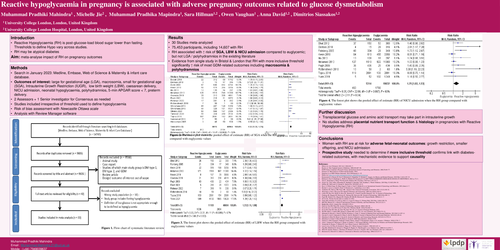
Reactive hypoglycaemia in pregnancy is associated with adverse pregnancy outcomes related to glucose dysmetabolism

Introduction 

Reactive Hypoglycaemia (RH) is post-glucose-load blood sugar lower than fasting. Thresholds to define hypoglycemia vary across previous studies. RH may be atypical diabetes due to impaired insulin secretion. This study aims tonmeta-analyse the impact of RH on pregnancy outcomes.

Design: Meta-analysis of observational cohort studies.

Methods

Literature searching was conducted in January 2023 throughout 4 databases: Medline, Embase, Web of Science & Maternity & infant care database. Outcomes of interest are large for gestational age (LGA), macrosomia, small for gestational age (SGA), Intrauterine Growth Restriction (IUGR),  low birth weight (LBW), caesarean delivery, NICU admission, neonatal hypoglycaemia, polyhydramnios, 5-min APGAR score < 7, and preterm delivery. The systematic review process was performed by 2 assessors and 1 senior investigator for consensus. Studies included irrespective of the threshold used to define hypoglycaemia. Risk of bias assessment with Newcastle Ottawa scale. Meta-analysis and forest plot generation was done with Review Manager software.

Results

AThroughout article screening, 30 Studies were included for meta-analysis. There were 75,453 participants, including 14,607 with RH. RH associated with increased risk of SGA, LBW & NICU admission compared to euglycemic but not LGA or polyhydramnios.

Discussion

RH is associated with growth restriction and smaller offspring. RH does not predispose pregnancy to atypical outcomes of GDM. Transplacental glucose and amino acid transport may take part in intrauterine growth. Placental histology abnormalities have been reported in growth restriction, and may be the missing link between RH and the related adverse pregnancy outcomes. There are no studies addressing placental nutrient transport function and placental histology appearances in RH pregnancy

 
Conclusions
 
Women with RH are at risk for some fetal-neonatal outcomes: growth restriction, smaller offspring, and NICU admission. No clear link with diabetes in the current literature. Prospective study needed. Evidence from a study in Bristol & London that RH defined with a more inclusive threshold significantly ↑ risk of most GDM-related outcomes
RCOG World Congress 2023 » banner
Copyright © 2015-2026, ePostersLive® SciGen is a registered trademark of SciGen Technologies S.A. Patent pending.

This website and third-party tools we use rely on cookies for the best user experience. By selecting "I agree", you agree to cookie usage as described in our Privacy Policy.