1,830 posters, 67 videos, 75 audios, 29 topics, 22 sessions, 4,727 authors, 1,697 institutions
ePostersLive by SciGen Technologies S.A. All rights reserved.
RCOG World Congress 2023
June 12 - 14, 2023 | London, UK

PP.0018
Pregnancy after loss: evaluating and improving patient experience at the Rainbow Clinic.
Part of Topic
High Risk Pregnancy
Audio
Pregnancy after loss: evaluating and improving patient experience at the Rainbow Clinic.
“We have felt so much happier being at Rainbow.”
Kajal K Tamber1, Emma Tomlinson2, Rebecca Barron2, Alexander EP Heazell1,2.
1 Maternal and Fetal Health Research Centre, University of Manchester, Manchester, UK. 2 Saint Mary’s Hospital, Manchester University NHS Foundation Trust, Manchester, UK.
What we learned...
1. The Rainbow Clinic service was rated as of a high standard by women attending.
2. Women suggested developing more clinics at different locations to increase accessibility.
3. Other improvements include sticker alterations (or other mechanisms to identify women) and increased awareness of the Rainbow clinic in other institutions.
Background:
In the UK, roughly 1 in 250 babies are stillborn each year. The majority of women who experience stillbirth become pregnant again – 80% within a year of their loss. Having a stillbirth means subsequent pregnancies are classified as “high-risk”; the RCOG recommends obstetric led antenatal care with birth in a specialist unit; though, there is a growing body of evidence to support provision of a specialist service.
Developed in 2013, the Rainbow Clinic is a specialist antenatal clinic providing obstetric-led continuous care with midwifery support to pregnant women with a previous loss. Women have regular US scans for fetal growth and umbilical artery Doppler US from 23 weeks’, a detailed birth plan and access to specialist bereavement counselling.
Aims:
1. Assess patient experience at the Rainbow Clinic.
2. Identify key areas for improvement in clinical care and patient experience.
Methods:
- 13-item questionnaire completed at the last appointment before birth.
- Assessed women’s emotions, opinions on appointments & involvement and planning of care.
- Data collected from women who attended the Rainbow Clinics at Wythenshawe & Saint Mary’s Hospital, Manchester between July 2016 and June 2021.
- Quantitative analysis: descriptive statistics and unpaired t-test.
- Qualitative analysis: summative content analysis.
Results:
Overall patient experience:
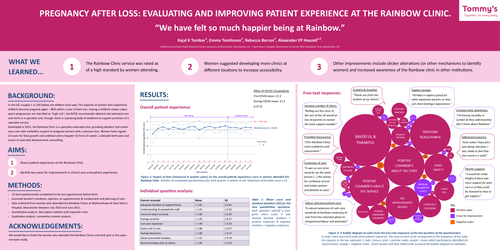
Figure 1: Impact of time (measured in quarter years) on the overall patient experience score in women attended the Rainbow Clinic. Number of completed questionnaires for each quarter is written in red. Maximum achievable score is 25.
Individual question analysis:
Table 1: Mean score and standard deviation (SD) for the nine quantitative questions. Each question utilised a five-point Likert scale: 0 was neutral, positive numbers = positive responses & negative numbers = negative responses.
Free text responses:
Figure 2: A bubble diagram of codes from the free-text responses of the last question of the questionnaire. In total, there were 610 codes from patient responses. The area of each circle corresponds to the frequency of the code; the squares in the key represent 1 code. Colours: pink = positive codes; purple = areas which participants identified for improvement; orange = negative codes. Direct quotes and their linked code surround the bubble diagram as examples.
Acknowledgements:
We would like to thank the women who attended the Rainbow Clinics and took part in this questionnaire study.