1,830 posters, 67 videos, 75 audios, 29 topics, 22 sessions, 4,727 authors, 1,697 institutions
ePostersLive by SciGen Technologies S.A. All rights reserved.
RCOG World Congress 2023
June 12 - 14, 2023 | London, UK

PP.0006
Analysis of the Changes in Trends of Rates for Induction-of-Labour and Caesarean-Sections
Poster Presenter
Authors
Affiliations
Part of Topic
Labour Ward Management
Analysis of the Changes in Trends of Rates for Induction of Labour and Caesarean Sections
S Basude, R Bahl
Introduction: There has been a noticeable change in womens’ birthing choices over the last few years and these became more prominent during and since the pandemic. Changes in birthing trends and the potential contributors need to be taken into consideration when planning future maternity services.
Objectives: To assess changes in women’s’ birthing modality and choices over the last decade, including the Covid-19 pandemic period and the potential contributors to be taken into consideration when planning future maternity services.
Contributing factors
1.Rising complexity of obstetric population: Data from the recent BirthRate Plus tool noted that 74% of our delivery suite case mix included women with complex care needs (Category IV and V).
2.Increased diagnosis of gestational diabetes since change in diagnostic criteria in 2013
times for family members whilst in hospital. Increasing demand on capacity led to delays in the IOL processes, worsening public perception of IOL.
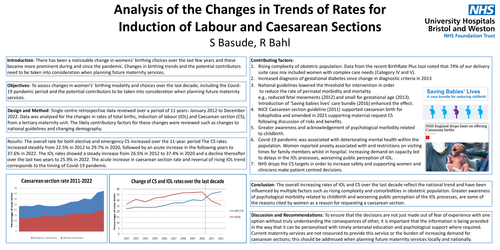
Conclusion: The overall increasing rates of IOL and CS over the last decade reflect the national trend and have been influenced by multiple factors such as rising complexity and comorbidities in obstetric population. Greater awareness of psychological morbidity related to childbirth and worsening public perception of the IOL processes, are some of the reasons cited by women as a reason for requesting a caesarean section.
Discussion and Recommendations: To ensure that the decisions are not just made out of fear of experience with one option without truly understanding the consequences of other, it is important that the information is being provided in the way that it can be personalised with timely antenatal education and psychological support where required. Current maternity services are not resourced to provide this service or the burden of increasing demand for caesarean sections; this should be addressed when planning future maternity services locally and nationally.