1,830 posters, 67 videos, 75 audios, 29 topics, 22 sessions, 4,727 authors, 1,697 institutions
ePostersLive by SciGen Technologies S.A. All rights reserved.
RCOG World Congress 2023
June 12 - 14, 2023 | London, UK

EP.1602
Audit to assess medical-management of heavy menstrual bleeding prior to surgical intervention
Poster Presenter
Authors
Affiliations
Part of Topic
Benign Gynaecology
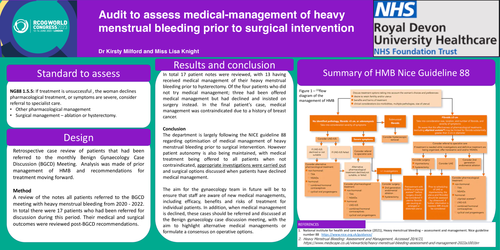
NG88 1.5.5: If treatment is unsuccessful , the woman declines pharmacological treatment, or symptoms are severe, consider referral to specialist care.
Surgical management – ablation or hysterectomy.[2018
Retrospective case review of patients that had been referred to the monthly Benign Gynaecology Case Discussion (BGCD) Meeting. Analysis was made of prior management of HMB and recommendations for treatment moving forward.
Method
A review of the notes all patients referred to the BGCD meeting with heavy menstrual bleeding from 2020 - 2022. In total there were 17 patients who had been referred for discussion during this period. Their medical and surgical outcomes were reviewed post-BGCD recommendations.
In total 17 patient notes were reviewed, with 13 having received medical management of their heavy menstrual bleeding prior to hysterectomy. Of the four patients who did not try medical management; three had been offered medical management but had declined and insisted on surgery instead. In the final patient’s case, medical management was contraindicated due to a history of breast cancer.
Conclusion
The department is largely following the NICE guideline 88 regarding optimisation of medical management of heavy menstrual bleeding prior to surgical intervention. However patient autonomy is also being maintained, with medical treatment being offered to all patients when not contraindicated, appropriate investigations were carried out and surgical options discussed when patients have declined medical management.
The aim for the gynaecology team in future will be to ensure that staff are aware of new medical managements, including efficacy, benefits and risks of treatment for individual patients. In addition, when medical management is declined, these cases should be referred and discussed at the Benign gynaecology case discussion meeting, with the aim to highlight alternative medical managements or formulate a consensus on operative options.