1,830 posters, 67 videos, 75 audios, 29 topics, 22 sessions, 4,727 authors, 1,697 institutions
ePostersLive by SciGen Technologies S.A. All rights reserved.
RCOG World Congress 2023
June 12 - 14, 2023 | London, UK

EP.1353
Veraflo Therapy for Management of Caesarean Scar Wound Infection: A Case Report
Poster Presenter
Authors
Affiliations
Part of Topic
Obesity
Veraflo Therapy for Management of Caesarean Scar Wound Infection: A Case Report
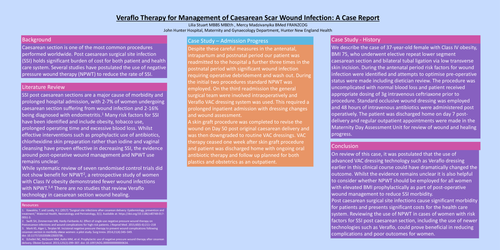
Background
Caesarean section is one of the most common procedures performed worldwide. Post caesarean surgical site infection (SSI) holds significant burden of cost for both patient and health care system. Several studies have postulated the use of negative pressure wound therapy (NPWT) to reduce the rate of SSI.
Case Study – History
We describe the case of 37-year-old female with Class IV obesity, BMI 75, who underwent elective repeat lower segment caesarean section and bilateral tubal ligation via low transverse skin incision. During the antenatal period risk factors for wound infection were identified and attempts to optimise pre-operative status were made including dietician review. The procedure was uncomplicated with normal blood loss and patient received appropriate dosing of 3g intravenous ceftriaxone prior to procedure. Standard occlusive wound dressing was employed and 48 hours of intravenous antibiotics were administered post operatively. The patient was discharged home on day 7 post-delivery and regular outpatient appointments were made in the Maternity Day Assessment Unit for review of wound and healing progress.
Case Study – Admission Progress
Despite these careful measures in the antenatal, intrapartum and postnatal period our patient was readmitted to the hospital a further 3 times in the postnatal period with significant wound infection requiring operative debridement and wash out. During the initial two procedures standard NPWT was employed. On the third readmission the general surgical team were involved intraoperatively and Veraflo VAC dressing system was used. This required a prolonged inpatient admission with dressing changes and wound assessment.
A skin graft procedure was completed to revise the wound on Day 50 post original caesarean delivery and was then downgraded to routine VAC dressings. VAC therapy ceased one week after skin graft procedure and patient was discharged home with ongoing oral antibiotic therapy and follow up planned for both plastics and obstetrics as outpatient.
Literature Review
SSI post caesarean sectionsare a major cause of morbidity and prolonged hospital admission, with 2-7% of women undergoing caesarean section suffering from wound infection and 2-16% being diagnosed with endometritis.1 Many risk factors for SSI have been identified and include obesity, tobacco use, prolonged operating time and excessive blood loss. Whilst effective interventions such as prophylactic use of antibiotics, chlorhexidine skin preparation rather than iodine and vaginal cleansing have proven effective in decreasing SSI, the evidence around post-operative wound management and NPWT use remains unclear.
While systematic review of 7 randomised control trials did not show benefit for NPWT2, a retrospective study of women with Class IV obesity demonstrated fewer wound infections with NPWT.3,4There are no studies that review Veraflo technology in caesarean section wound healing.
Conclusion
On review of this case, it was postulated that the use of advanced VAC dressing technology such as Veraflo dressing earlier in this clinical course could have dramatically changed the outcome. Whilst the evidence remains unclear it is also helpful to consider whether NPWT should be employed for all women with elevated BMI prophylactically as part of post-operative wound management to reduce SSI morbidity.
Post caesarean surgical site infections cause significant morbidity for patients and presents significant costs for the health care system. Reviewing the use of NPWT in cases of women with risk factors for SSI post caesarean section, including the use of newer technologies such as Veraflo, could prove beneficial in reducing complications and poor outcomes for women.