1,830 posters, 67 videos, 75 audios, 29 topics, 22 sessions, 4,727 authors, 1,697 institutions
ePostersLive by SciGen Technologies S.A. All rights reserved.
RCOG World Congress 2023
June 12 - 14, 2023 | London, UK

EP.1347
A case of splenic artery rupture secondary to nodular regenerative hyperplasia
Poster Presenter
Authors
Affiliations
Part of Topic
Maternal Medicine
A case of splenic artery rupture secondary to nodular regenerative hyperplasia in pregnancy
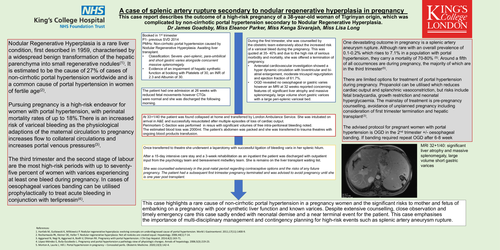
Nodular Regenerative Hyperplasia is a rare liver condition, first described in 1959, characterised by a widespread benign transformation of the hepatic parenchyma into small regenerative nodules(1). It is estimated to be the cause of 27% of cases of non-cirrhotic portal hypertension worldwide and is a common cause of portal hypertension in women of fertile age(2).
Pursuing pregnancy is a high-risk endeavor for women with portal hypertension, with perinatal mortality rates of up to 18%.There is an increased risk of variceal bleeding as the physiological adaptions of the maternal circulation to pregnancy increases flow to collateral circulations and increases portal venous pressures(3).
The third trimester and the second stage of labour are the most high-risk periods with up to seventy-five percent of women with varices experiencing at least one bleed during pregnancy. In cases of oesophageal varices banding can be utilised prophylactically to treat acute bleeding in conjunction with terlipressin(4).
This case highlights a rare cause of non-cirrhotic portal hypertension in a pregnancy women and the significant risks to mother and fetus of embarking on a pregnancy with poor synthetic liver function and known varices. Despite extensive counselling, close observation and timely emergency care this case sadly ended with neonatal demise and a near terminal event for the patient. This case emphasises the importance of multi-disciplinary management and contingency planning for high-risk events such as splenic artery aneurysm rupture.