1,830 posters, 67 videos, 75 audios, 29 topics, 22 sessions, 4,727 authors, 1,697 institutions
ePostersLive by SciGen Technologies S.A. All rights reserved.
RCOG World Congress 2023
June 12 - 14, 2023 | London, UK

EP.1328
Is minimally invasive approach to cancer staging feasible for patients on hemodialysis?
Poster Presenter
Part of Topic
Gynae Oncology
Introduction
Surgical risk in patients on haemodialysis has been known to be higher than that in patients with minimal medical comorbidities. There is a 1-4% overall risk of surgical mortality, which rises to as high as 20% when applied to patients with concomitant diabetes mellitus and patient age above 60 years old (1, 3). Patients with end-stage renal disease (ESRF) remain longer in intensive care units and are hospitalised for extended periods of time when compared to patients who do not have renal disease (2).
Most patients with ESRF also have other co-existing medical comorbidities such as ischaemic heart disease (IHD), hypertension (HTN) and diabetes (DM). This will usually make the surgical morbidity and mortality higher.
As currently there are not many studies that investigate mortality and morbidity rates specifically for patients with end stage renal failure undergoing hysterectomy as for these patients, non-surgical would usually be first line due to concerns over surgical mortality and morbidity. In general surgery, the estimated morbidity rates in this group of patients range from 14-64%, with common causes of morbidity being difficulties in fluid volume regulation and electrolyte imbalances. Hyperkalaemia is the most common complication, followed by infection, bleeding and arrhythmias Other noteworthy causes of morbidity include anaemia, neuropathy, and port site infections. (3)
It is hence pertinent that steps are taken to minimise these risks in this group of patients to ensure smooth recovery, avoid complications and prevent long-term morbidity.
Objective
This study will attempt to determine if minimally invasive approaches to cancer staging is safe and feasible for patients on haemodialysis. In addition, we would like to develop a clinical pathway to optimise their outcomes.
Method
A total of seventeen haemodialysis patients undergoing either laparoscopic or robotic endometrial cancer staging were selected. Their demographics, operative details, oncological outcomes, and any post-operative complications were recorded. Special attention was also given to their pre-, intra-, and post-operative patient experience. Good practices were identified after analysing their data. From this data, we aim to propose a pathway to streamline care of this select group of patients.
Results
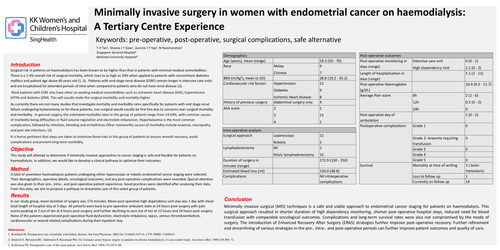
In our study group, mean duration of surgery was 173 minutes. Mean post operative high dependency unit stay was 1 day with mean total length of hospital stay at 5 days. All patients were back to pre-operative ambulant state at 24 hours post-surgery with pain scores peaking at 2 out of ten at 6 hours post-surgery, and further declining to zero out of ten at 12 hours and 24 hours post-surgery. None of the patients experienced post-operative fluid dysfunction, electrolyte imbalance, sepsis, venous thromboembolism, cardiovascular or wound related complications during their inpatient stay.
Conclusion
Minimally invasive surgical (MIS) techniques is a safe and viable approach to endometrial cancer staging for patients on haemodialysis. This surgical approach resulted in shorter duration of high dependency monitoring, shorter post-operative hospital stays, reduced need for blood transfusion with comparable oncological outcomes. Complications and long-term survival rates were also not compromised by the mode of surgery. The introduction of Enhanced Recovery After Surgery (ERAS) strategies further improve post-operative recovery. Further refinement and streamlining of various strategies in the pre-, intra-, and post-operative periods can further improve patient outcomes and quality of care.