1,830 posters, 67 videos, 75 audios, 29 topics, 22 sessions, 4,727 authors, 1,697 institutions
ePostersLive by SciGen Technologies S.A. All rights reserved.
RCOG World Congress 2023
June 12 - 14, 2023 | London, UK

EP.1267
Causes for Caesarian section in a private hospital in Bangladesh
Poster Presenter
Authors
Affiliations
Part of Topic
Hot Topics (Emerging research/issues) in Obstetrics
Causes for Caesarean Sections: A Prospective Cohort in Bangladesh
ISMATARA BINA, AYMAN ARIK KAZI
OBJECTIVE:
The escalating rate of Caesarean section (C/S) deliveries is a significant concern in countries like Bangladesh. This study aims to (i) determine the prevalence of C/S among deliveries, and (ii) identify the underlying reasons for the preference of surgical deliveries in individual cases. The findings will help inform future efforts to promote vaginal deliveries as the norm rather than the exception.
METHODS:
Khalishpur Clinic (KC) is 50-bed hospital in Khulna, Bangladesh and serves a suburban community of 100,000 people. Data collection was conducted at KC between April 2022 to 2023, utilizing a randomized prospective study design. A total of 1138 pregnant women were included in the descriptive analysis.
RESULTS:
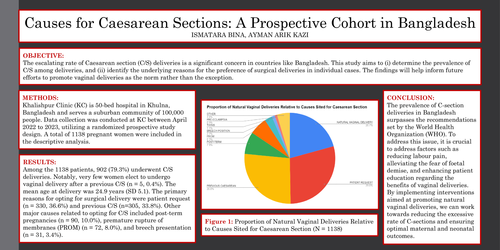
Among the 1138 patients, 902 (79.3%) underwent C/S deliveries. Notably, very few women elect to undergo vaginal delivery after a previous C/S (n = 5, 0.4%). The mean age at delivery was 24.9 years (SD 5.1). The primary reasons for opting for surgical delivery were patient request (n = 330, 36.6%) and previous C/S (n=305, 33.8%). Other major causes related to opting for C/S included post-term pregnancies (n = 90, 10.0%), premature rupture of membranes (PROM) (n = 72, 8.0%), and breech presentation (n = 31, 3.4%).
Figure 1: Proportion of Natural Vaginal Deliveries Relative to Causes Sited for Caesarean Section (N = 1138)
CONCLUSION:
The prevalence of C-section deliveries in Bangladesh surpasses the recommendations set by the World Health Organization (WHO). To address this issue, it is crucial to address factors such as reducing labour pain, alleviating the fear of foetal demise, and enhancing patient education regarding the benefits of vaginal deliveries. By implementing interventions aimed at promoting natural vaginal deliveries, we can work towards reducing the excessive rate of C-sections and ensuring optimal maternal and neonatal outcomes.