1,830 posters, 67 videos, 75 audios, 29 topics, 22 sessions, 4,727 authors, 1,697 institutions
ePostersLive by SciGen Technologies S.A. All rights reserved.
RCOG World Congress 2023
June 12 - 14, 2023 | London, UK

EP.1142
GBS prophylaxis audit- Prevention of GBS in newborn
Poster Presenter
Authors
Affiliations
Part of Topic
Labour Ward Management
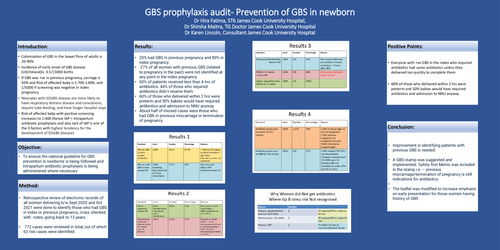
Introduction:
Colonization of GBS in the bowel flora of adults is 20 40%
Incidence of early onset of GBS disease (UK/Ireland) is 0.57/1000 births
If GBS was + ve in previous pregnancy, carriage is 50% and Risk of affected baby is 1:700 1:800, and 1/5000 if screening was negative in index pregnancy
Neonates with EOGBS disease are more likely to have respiratory distress disease and convulsions, require tube feeding, and have longer hospital stays
Risk of affected baby with positive screening increases to 1:400 (hence IAP = Intrapartum antibiotic prophylaxis and also lack of IAP is one of the 3 factors with highest tendency for the development of EOGBS disease
Objective:
To ensure the national guideline for GBS prevention in newborns is being followed and intrapartum antibiotic prophylaxis is being administered where necessary
Method:
Retrospective review of electronic records of all women delivering b/w Sept 2020 and Oct 2021 were done to identify those who had GBS in index or previous pregnancy, cross checked with notes, going back to 13 years.
772 cases were reviewed in total, out of which 63 risk cases were identified
Results:
20% had GBS in previous pregnancy and 80% in index pregnancy.
27% of all women with previous GBS (related to pregnancy in the past) were not identified at any point in the index pregnancy.
60% of patients received less than 4 hrs of antibiotics. 44% of those who required antibiotics didn’t receive them.
60% of those who delivered within 2 hrs were preterm and 50% babies would have required antibiotics and admission to NNU anyway.
About half of missed cases were those who had GBS in previous miscarriage or termination of pregnancy.
Positive Points:
Everyone with ve GB S in the index who required antibiotics had some antibiotics unless they delivered too quickly to complete them
60% of those who delivered within 2 hrs were preterm and 50% babies would have required antibiotics and admission to NNU anyway
Conclusion:
Improvement in identifying patients with previous GBS is needed.
A GBS stamp was suggested and implemented. Safety first Memo was included n the stamp i.e. previous miscarriage/termination of pregnancy is still indications for antibiotics
The leaflet was modified to increase emphasis on early presentation for those women having history of GBS