296 posters, 7 videos, 13 audios, 14 topics, 10 sessions, 1,019 authors, 259 institutions
ePostersLive by SciGen Technologies S.A. All rights reserved.
RCOphth Annual Congress 2026
18 - 21 May, 2026 | Manchester Central, Manchester

P228
Provision and Utilisation of Professional Interpreter Services in Cataract Clinics
Poster Presenter
Part of Topic
Miscellaneous
Background
Effective communication is essential for safe, patient-centred care, yet patients with limited English proficiency (LEP) often face barriers that affect understanding, decision-making, and outcomes.
NHS commissioning guidelines and the GMC require that a professional interpreter is offered whenever language hinders medical discussion, and that clinicians take reasonable steps to meet patients' communication needs.
Despite this, interpreter services are known to be underused in the NHS, creating potential risks and inequities. In ophthalmology, where clear communication is critical for consent and surgical planning, unmet language needs may significantly impact care.
This audit aimed to identify the prevalence of LEP in the cataract clinic, assess interpreter use, and explore barriers to following guidance.
Methods
- Prospective observational audit across four Moorfields cataract clinic sites in London (Stratford, City Road, St Ann's, St George's).
- Patient and staff surveys collected over the audit period.
- LEP defined as patients self-reporting that they were not comfortable speaking English for medical consultations.
- Interpreter provision, alternative interpreting methods, and barriers to use recorded; compared with NHS and GMC standards.
- Approved by the Moorfields Eye Hospital Audit Committee (Audit Number: 1678).
- 161 patients audited — median age 72 years, 55% female.
Guidance
NHS commissioning guidelines "Where language is a problem in discussing health matters a professional interpreter should always be offered, rather than relying on family or friends."
General Medical Council "Must take steps to meet patients' language and communication needs, so you can support them to engage in meaningful dialogue and make informed decisions about their care."
Aims
- Determine prevalence of LEP in cataract clinic.
- Assess interpreter service utilisation.
- Explore barriers to interpreter use.
Results
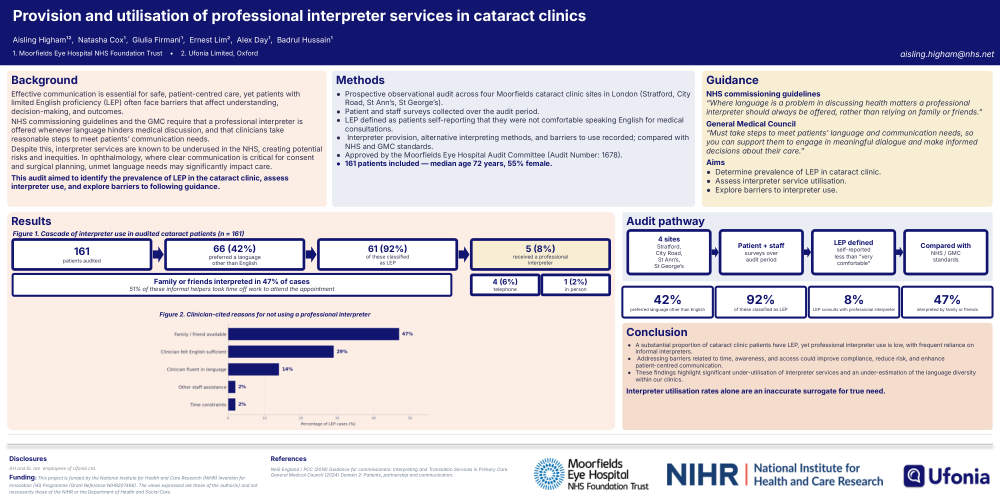
Figure 1. Cascade of interpreter use in audited cataract patients (n = 161)
161 patients audited → 66 (42%) preferred a language other than English → 61 (92%) of these classified as LEP → 5 (8%) received a professional interpreter (4 (6%) telephone; 1 (2%) in person).
Family or friends interpreted in 47% of cases. 51% of these informal helpers took time off work to attend the appointment.
Figure 2. Clinician-cited reasons for not using a professional interpreter
- Family / friend available — 47%
- Clinician felt English sufficient — 29%
- Clinician fluent in language — 14%
- Other staff assistance — 2%
- Time constraints — 2%
Audit pathway
4 sites (Stratford, City Road, St Ann's, St George's) → Patient + staff surveys over audit period → LEP defined (self-reported, less than "very comfortable") → Compared with NHS / GMC standards.
Headline statistics
- 42% preferred language other than English
- 92% of these classified as LEP
- 8% of LEP consults with professional interpreter
- 47% interpreted by family or friends
Conclusion
- A substantial proportion of cataract clinic patients have LEP, yet professional interpreter use is low, with frequent reliance on informal interpreters.
- Addressing barriers related to time, awareness, and access could improve compliance, reduce risk, and enhance patient-centred communication.
- These findings highlight significant under-utilisation of interpreter services and an under-estimation of the language diversity within our clinics.
Interpreter utilisation rates alone are an inaccurate surrogate for true need.