296 posters, 7 videos, 13 audios, 14 topics, 10 sessions, 1,019 authors, 259 institutions
ePostersLive by SciGen Technologies S.A. All rights reserved.
RCOphth Annual Congress 2026
18 - 21 May, 2026 | Manchester Central, Manchester

P221
Eye research applications to United Kingdom research ethics committees: insights from 2022-2024
Poster Presenter
Part of Topic
Miscellaneous
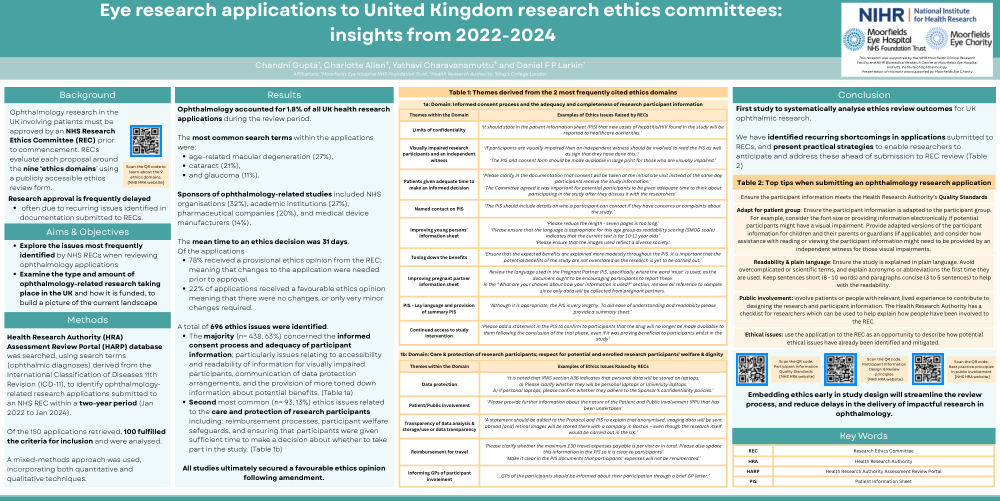
Title: Eye research applications to United Kingdom research ethics committees: insights from 2022-2024
Background: Ophthalmology research in the UK involving patients must be approved by an NHS Research Ethics Committee (REC) prior to commencement. RECs evaluate each proposal around the nine ‘ethics domains’ using a publicly accessible ethics review form. Research approval is frequently delayed; often due to recurring issues identified in documentation submitted to RECs.
Aims & Objectives:
- Explore the issues most frequently identified by NHS RECs when reviewing ophthalmology applications
- Examine the type and amount of ophthalmology-related research taking place in the UK and how it is funded, to build a picture of the current landscape
Of the 150 applications retrieved, 100 fulfilled the criteria for inclusion and were analysed.
A mixed-methods approach was used, incorporating both quantitative and qualitative techniques.
The most common search terms within the applications were:
- age-related macular degeneration (27%),
- cataract (21%),
- and glaucoma (11%).
Sponsors of ophthalmology-related studies included NHS organisations (32%), academic institutions (27%), pharmaceutical companies (20%), and medical device manufacturers (14%).
The mean time to an ethics decision was31 days.
Of the applications
- 78% received a provisional ethics opinion from the REC; meaning that changes to the application were needed prior to approval.
- 22% of applications received a favourable ethics opinion meaning that there were no changes, or only very minor changes required.
A total of 696 ethics issueswere identified.
- The majority (n= 438, 63%) concerned the informed consent process and adequacy of participant information; particularly issues relating to accessibility and readability of information for visually impaired participants, communication of data protection arrangements, and the provision of more toned down information about potential benefits. (Table 1a)
- Second most common (n= 93, 13%) ethics issues related to the care and protection of research participants including: reimbursement processes, participant welfare safeguards, and ensuring that participants were given sufficient time to make a decision about whether to take part in the study. (Table 1b)
All studies ultimately secured a favourable ethics opinion following amendment.
We have identified recurring shortcomings in applications submitted to RECs, and present practical strategies to enable researchers to anticipate and address these ahead of submission to REC review.
Practical strategies include:
- Tailoring participant information to adjust for visual impairment,
- Ensuring plain language is used throughout information provided to participants
- Involving patients in study design, and proactively addressing how potential ethical issues have already been addressed and mitigated in the submission to the REC.