296 posters, 7 videos, 13 audios, 14 topics, 10 sessions, 1,019 authors, 260 institutions
ePostersLive by SciGen Technologies S.A. All rights reserved.
RCOphth Annual Congress 2026
18 - 21 May, 2026 | Manchester Central, Manchester

P121
Quality of Life Before and After Developing Primary Open Angle Glaucoma in the�Ocular Hypertension Treatment Study
Poster Presenter
Authors
John Burkland, Mae Gordon, James Brandt, Dale Heuer, Eve Higginbotham, Richard Parrish, Chris Johnson, John Keltner, Julia Huecker, Michael Kass
Affiliations
Washington University in St. Louis School of Medicine, University of California Davis, University of California Los Angeles David Geffen School of Medicine, University of Pennsylvania Perelman School of Medicine, University of Miami School of Medicine,
Part of Topic
Glaucoma
Vision-Specific Quality of Life Before and After Diagnosis of Primary Open Angle Glaucoma in the Ocular Hypertension Treatment Study (OHTS)
John Burkland, BS1, Mae Gordon, PhD1, James Brandt, MD2, Dale Heuer, MD5, Eve Higginbotham, MD6, Richard Parrish II, MD3
Chris Johnson, MSc, PhD, Dsc4, John Keltner, MD2, Julia Huecker, PhD1, Michael Kass, MD1
Purpose
• To compare the quality-of-life differences over a period of 15 years between an inception cohort of participants who developed glaucoma during the OHTS trial and control subjects with ocular hypertension alone.
Methods
Study Design
• Post-hoc analysis of data collected prospectively in the OHTS trial.
Quality of Life Measurements
• NEI VFQ-25 was administered every 2 years between 2001 and 2008, then once between 2016-2019.
Participants
-
Ocular hypertensive controls: IOP between 24-32 mmHg in one eye and 21-32
mmHg in the fellow eye, normal visual fields and optic discs in both eyes as
determined by reading centers.
-
POAG: Reproducible optic disc deterioration and/or reproducible visual field (VF)
abnormalities as determined by masked graders at reading centers and attributed to glaucoma by a masked endpoint committee.
Stratification of POAG Severity:
• 5 mutually exclusive groups based on glaucoma status at the time of the last VFQ administration:
∘ no POAG
∘ unilateral optic disc POAG ∘ bilateral optic disc POAG
∘ unilateral visual field POAG ∘ bilateral visual field POAG
Primary Outcome:
• Change in 11 VFQ subscale scores (excluding general health) in participants who developed POAG compared to their peers who did not develop POAG.
Results
• 29% (472 of 1,636) of the participants originally enrolled in the OHTS trial met inclusion criteria for this analysis. Of those, 61.6% self-reported female, 21.5% self-reported African origin, mean age (SD) at baseline was 58.0 (7.3).
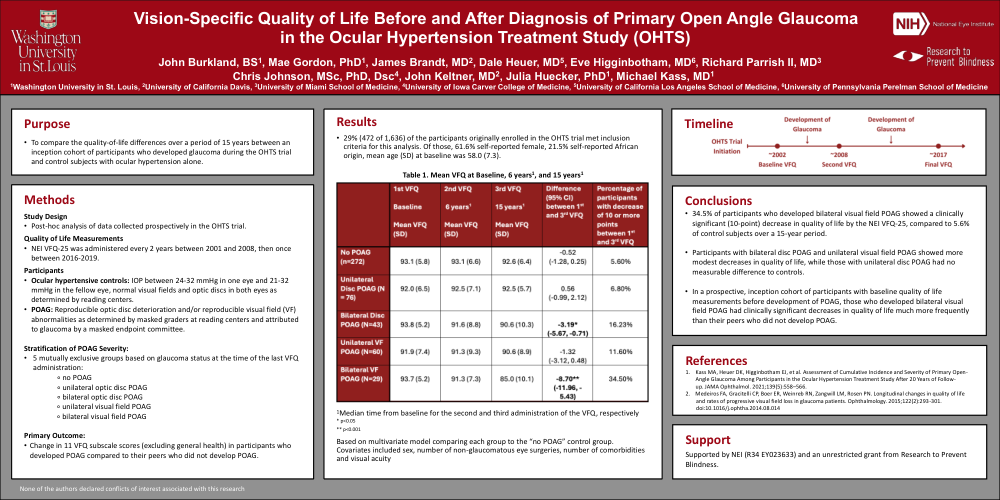
Table 1. Mean VFQ at Baseline, 6 years1, and 15 years1
Conclusions
• 34.5% of participants who developed bilateral visual field POAG showed a clinically significant (10-point) decrease in quality of life by the NEI VFQ-25, compared to 5.6% of control subjects over a 15-year period.
• Participants with bilateral disc POAG and unilateral visual field POAG showed more modest decreases in quality of life, while those with unilateral disc POAG had no measurable difference to controls.
• In a prospective, inception cohort of participants with baseline quality of life measurements before development of POAG, those who developed bilateral visual field POAG had clinically significant decreases in quality of life much more frequently than their peers who did not develop POAG.
References
-
Kass MA, Heuer DK, Higginbotham EJ, et al. Assessment of Cumulative Incidence and Severity of Primary Open- Angle Glaucoma Among Participants in the Ocular Hypertension Treatment Study After 20 Years of Follow-
up. JAMA Ophthalmol. 2021;139(5):558–566. -
Medeiros FA, Gracitelli CP, Boer ER, Weinreb RN, Zangwill LM, Rosen PN. Longitudinal changes in quality of life and rates of progressive visual field loss in glaucoma patients. Ophthalmology. 2015;122(2):293-301. doi:10.1016/j.ophtha.2014.08.014
Support
Supported by NEI (R34 EY023633) and an unrestricted grant from Research to Prevent Blindness.
None of the authors declared conflicts of interest associated with this research