358 posters, 97 topics, 122 sessions, 958 authors, 239 institutions
ePostersLive by SciGen Technologies S.A. All rights reserved.
79th PostGraduate Assembly in Anesthesiology 2025
December 12 - 15, 2025 | New York City

2106
Preoperative Anesthetic Evaluation and Optimization in a Patient with Anti-GAD65–Associated Neuromuscular Respiratory Dysfunction
Poster Presenter
Part of Topic
Neuroanesthesia - Perioperative Management
Preoperative Anesthetic Evaluation and Optimization in a Patient with Anti-GAD65–Associated Neuromuscular Respiratory Dysfunction
Michael Lu, BA 1; Richard Villa, MD 2; Meng Wang, MD, PhD 2
Renaissance School of Medicine, Stony Brook University 1 Department of Anesthesiology, Stony Brook Medicine 2
Introduction
Anti-GAD65 antibodies are linked to a spectrum of autoimmune neurologic syndromes—including encephalitis, cerebellar ataxia, and stiff-person syndrome—that may involve central or peripheral motor pathways and impair respiratory function. Patients with diaphragmatic weakness, restrictive lung disease, or sleep-disordered breathing present unique perioperative challenges. Evidence regarding neuromuscular junction (NMJ) involvement remains limited, making anesthetic planning complex and individualized.
Case Description
A 55-year-old male with anti-GAD65–associated neuromuscular respiratory disorder, restrictive lung disease, and obstructive sleep apnea presented for preoperative evaluation before elective lithotripsy. He reported progressive exertional dyspnea, and prior PFTs showed FEV1 and FVC around 50%, with repeat testing pending. Neurology noted bilateral diaphragmatic weakness but no contraindication to surgery. The patient was highly anxious about general anesthesia and requested overnight monitoring, while regional anesthesia was deemed unsuitable by the surgical team. Because the degree of neuromuscular junction involvement was unclear, we recommended intraoperative quantitative train-of-four monitoring if neuromuscular blockade were required. Due to incomplete pulmonary evaluation and patient concerns, the procedure was postponed pending further multidisciplinary optimization, and ultimately performed several months later without issues.
Perioperative Considerations
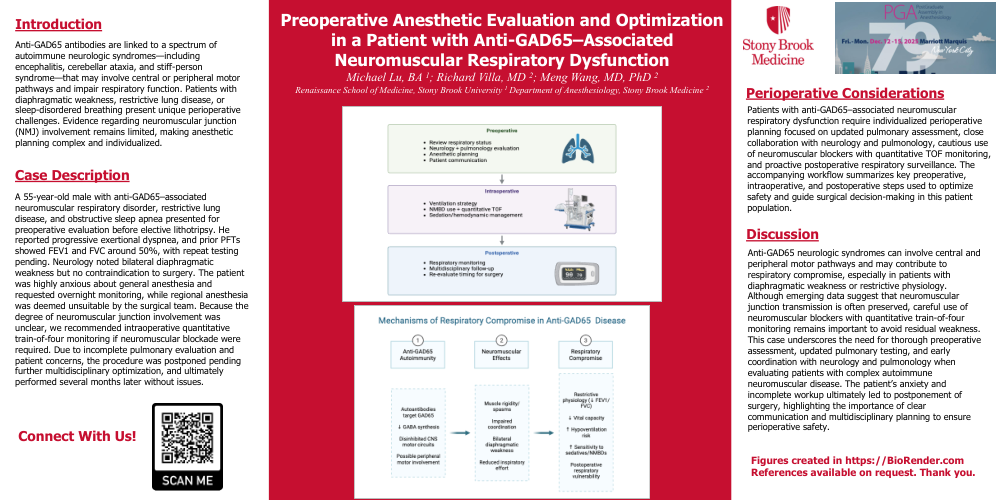
Patients with anti-GAD65–associated neuromuscular respiratory dysfunction require individualized perioperative planning focused on updated pulmonary assessment, close collaboration with neurology and pulmonology, cautious use of neuromuscular blockers with quantitative TOF monitoring, and proactive postoperative respiratory surveillance. The accompanying workflow summarizes key preoperative, intraoperative, and postoperative steps used to optimize safety and guide surgical decision-making in this patient population.
Discussion
Anti-GAD65 neurologic syndromes can involve central and peripheral motor pathways and may contribute to respiratory compromise, especially in patients with diaphragmatic weakness or restrictive physiology. Although emerging data suggest that neuromuscular junction transmission is often preserved, careful use of neuromuscular blockers with quantitative train-of-four monitoring remains important to avoid residual weakness. This case underscores the need for thorough preoperative assessment, updated pulmonary testing, and early coordination with neurology and pulmonology when evaluating patients with complex autoimmune neuromuscular disease. The patient’s anxiety and incomplete workup ultimately led to postponement of surgery, highlighting the importance of clear communication and multidisciplinary planning to ensure perioperative safety.