358 posters, 97 topics, 122 sessions, 958 authors, 239 institutions
ePostersLive by SciGen Technologies S.A. All rights reserved.
79th PostGraduate Assembly in Anesthesiology 2025
December 12 - 15, 2025 | New York City

4030
From Button to Bedside: Exploring Limitations and Nursing-Driven Alternatives to Patient-Controlled Analgesia
Poster Presenter
Authors
Affiliations
Part of Topic
Pain Medicine - Regional and Acute Pain
From Button to Bedside: Exploring Limitations and Nursing-Driven Alternatives to Patient-Controlled Analgesia
Sheetal Bapu, BS1; Aneri Patel, MBA1; Archana Mane, MD2
1Albany Medical College; 2Albany Medical Center, Department of Anesthesiology
INTRODUCTION
Patient-controlled analgesia (PCA) with hydromorphone is widely used for postoperative and critical care pain management, offering rapid relief and patient autonomy.
This project was inspired by a 23-year-old trauma patient with bilateral mandibular fractures (unable to speak) and bilateral arm fractures (unable to press PCA). His pain, agitation, inability to communicate, and physical limitations excluded him from standard PCA. Nurses improvised by using an EKG lead as a tactile PCA button substitute, highlighting a critical gap in accessibility.
Literature reveals that:
To identify barriers to PCA accessibility and evaluate nursing-identified alternatives and adaptations for effective pain management in patients unable to operate standard PCA devices.
METHODS
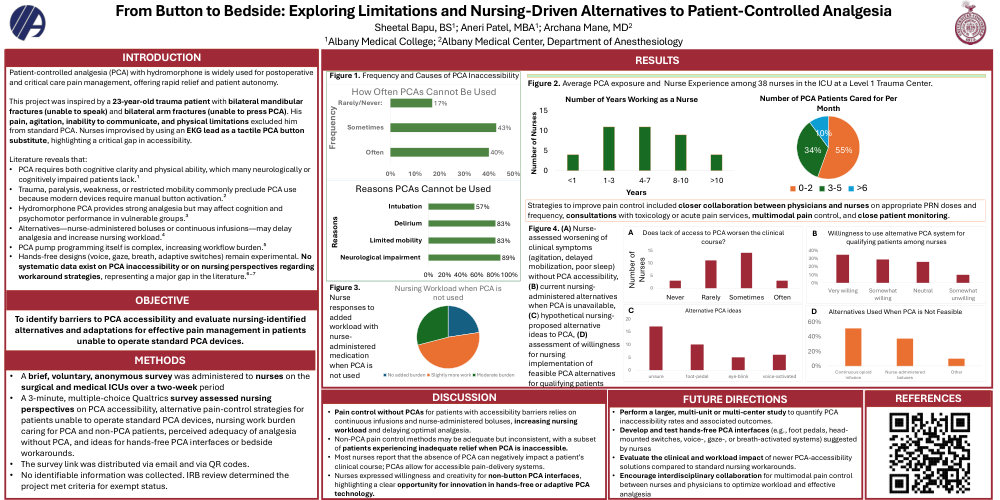
Figure 1. Frequency and Causes of PCA Inaccessibility
Figure 2. Average PCA exposure and Nurse Experience among 38 nurses in the ICU at a Level 1 Trauma Center.
Figure 3. Nurse responses to added workload with nurse-administered medication when PCA is not used
Figure 4. (A) Nurse-assessed worsening of clinical symptoms (agitation, delayed mobilization, poor sleep) without PCA accessibility, (B) current nursing-administered alternatives when PCA is unavailable, (C) hypothetical nursing-proposed alternative ideas to PCA, (D) assessment of willingness for nursing implementation of feasible PCA alternatives for qualifying patients
Strategies to improve pain control included closer collaboration between physicians and nurses on appropriate PRN doses and frequency, consultations with toxicology or acute pain services, multimodal pain control, and close patient monitoring
DISCUSSION
Pain control without PCAs for patients with accessibility barriers relies on continuous infusions and nurse-administered boluses, increasing nursing workload and delaying optimal analgesia.
•Non-PCA pain control methods may be adequate but inconsistent, with a subset of patients experiencing inadequate relief when PCA is inaccessible.
•Most nurses report that the absence of PCA can negatively impact a patient’s clinical course; PCAs allow for accessible pain-delivery systems.
•Nurses expressed willingness and creativity for non-button PCA interfaces, highlighting a clear opportunity for innovation in hands-free or adaptive PCA technology.
FUTURE DIRECTIONS
Perform a larger, multi-unit or multi-center study to quantify PCA inaccessibility rates and associated outcomes.
•Develop and test hands-free PCA interfaces (e.g., foot pedals, head-mounted switches, voice-, gaze-, or breath-activated systems) suggested by nurses
•Evaluate the clinical and workload impact of newer PCA-accessibility solutions compared to standard nursing workarounds.
•Encourage interdisciplinary collaboration for multimodal pain control between nurses and physicians to optimize workload and effective analgesia
REFERENCES
- Hudcova J, McNicol ED, Quah CS, Lau J, Carr DB. Patient controlled opioid analgesia versus conventional opioid analgesia for postoperative pain. Cochrane Database of Systematic Reviews 2006, Issue 4. Art. No.: CD003348. DOI: 10.1002/14651858.CD003348.pub2. Accessed 11 July 2025.
- Donelson, W., Dean, J., Ablah, E., Whitaker, C., Berg, G. M., McCormick, K., Okut, H., & Whitaker, C. (2022). Patient Controlled Analgesia and an Alternative Protocol: A Comparison of Outcomes After Thoracic and Lumbar Surgery. Kansas journal of medicine, 15(2), 237–240. https://doi.org/10.17161/kjm.vol15.15972
- Kalechstein A, et al. PCA use in cognitively impaired older adults. Pain Med. 2009.
- Los Angeles County DHS. PCA Candidate Requirements & Guidelines.
- Scotto di Uccio L, et al. Hydromorphone vs morphine PCA cognitive effects. Can J Anaesth. 1995.
- Takahashi H, et al. Hydromorphone PCA vs nurse-administered titration in cancer pain. J Pain Symptom Manage. 2021.
- Prebtani F, et al. Nursing challenges in PCA pump programming: ethnographic study. J Patient Saf. 2023.
- Karlsson V, et al. Eye-gaze communication in mechanically ventilated ICU patients. Intensive Crit Care Nurs. 2012.
- Feit AM, et al. EyeTAP: hybrid gaze–voice activation to reduce unintended triggering. ACM CHI Conference. 2020.