358 posters, 97 topics, 122 sessions, 958 authors, 239 institutions
ePostersLive by SciGen Technologies S.A. All rights reserved.
79th PostGraduate Assembly in Anesthesiology 2025
December 12 - 15, 2025 | New York City

4014
Multimodal Prehabilitation Supported by Instrumented Functional Testing Improves Surgical Recovery in High-Risk Patient
Poster Presenter
Part of Topic
Ambulatory - Perioperative Management
Multimodal Prehabilitation Supported by Instrumented Functional Testing Improves Surgical Recovery in High-Risk Patients
BACKGROUND
Although overall surgical mortality is low, roughly 80% of postoperative complications occur in high-risk patients with advanced age, comorbidities and frailty.
At Ospedale di Circolo Varese ASST Settelaghi - Italy, a multimodal prehabilitation program combining muscolar and respiratory exercises, nutrition, cognitive training and psychological support to improve functional capacity has been developed.
This strategy aims to:
- minimize surgical delays;
- optimize resource use;
- strengthen patients’ functional capacity;
- reduce length of hospital stay;
- improve postoperative outcomes and recovery.
METHODS/RESULTS
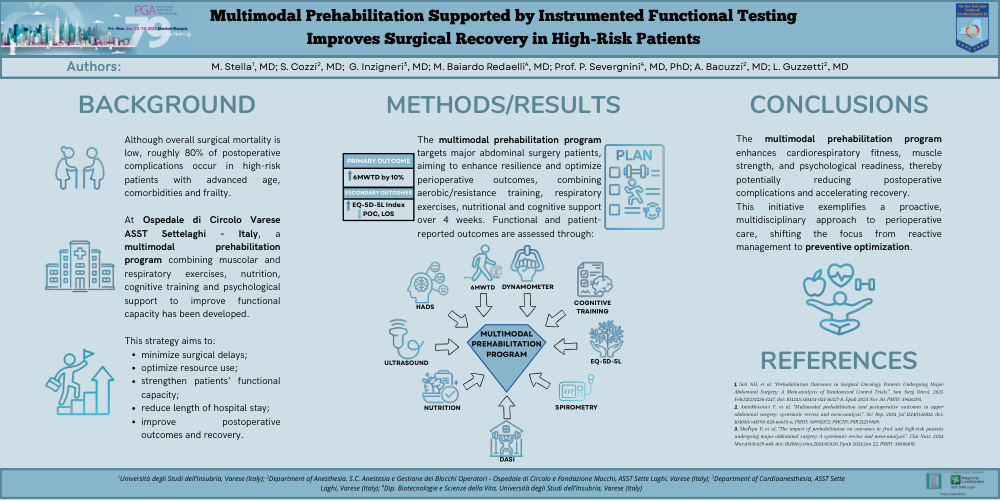
The multimodal prehabilitation program targets major abdominal surgery patients, aiming to enhance resilience and optimize perioperative outcomes, combining aerobic/resistance training, respiratory exercises, nutritional and cognitive support over 4 weeks.
Functional and patient-reported outcomes are assessed through:
- 6MWTD;
- DYNAMOMETER;
- COGNITIVE TRAINING;
- EQ-5D-5L;
- SPIROMETRY;
- DASI;
- NUTRITION;
- ULTRASOUND;
- HADS.
PRIMARY OUTCOME: improving 6MWTD by 10%
SECONDARY OUTCOMES: improving EQ-5D-5L Index; reducing post-operative complications and hospital lenght of stay
CONCLUSIONS
The multimodal prehabilitation program enhances cardiorespiratory fitness, muscle strength, and psychological readiness, thereby potentially reducing postoperative complications and accelerating recovery. This initiative exemplifies a proactive, multidisciplinary approach to perioperative care, shifting the focus from reactive management to preventive optimization.