358 posters, 97 topics, 122 sessions, 958 authors, 239 institutions
ePostersLive by SciGen Technologies S.A. All rights reserved.
79th PostGraduate Assembly in Anesthesiology 2025
December 12 - 15, 2025 | New York City

3122
Understanding perceptions of pain relief during labor among patients of Hispanic ethnicity
Poster Presenter
Part of Topic
Obstetrics - Pain Medicine
Background
Pain management during the process of labor in obstetrics is an intervention that can minimize the intense discomfort experienced by parturients. Neuraxial labor analgesia, that includes epidurals, are the gold standard for pain management during labor. However, several factors can result in parturients not receiving neuraxial labor analgesia.
Demographics can play a role in unequal healthcare experiences1,2. In fact, few studies analyze the relationship between race/ethnicity and the receipt of labor pain relief. Biases can color clinical communication and decision-making resulting in healthcare disparities1. Preconceived notions about patients may lead to inaccurate assessments of pain severity, thus medication is underdelivered to minority patients1. Patients of Hispanic origin are less likely to receive epidurals for singleton vaginal deliveries3,4.
Hispanic patients who have reported their own preconceived notions about epidural pain relief report concerns of chronic lower back pain, paralysis, wanting a “natural delivery” and a fear of needles1. Evidence of racial and ethnic disparities in administration of neuraxial labor analgesia presents an opportunity for us to improve care and promote informed medical decision making. This study aims to understand the local perspectives on labor pain relief to inform healthcare professionals on how to best address existing barriers and educate patients on their medical options.
-
This qualitative study was performed by interviewers (medical students, residents) who received training in qualitative interviewing techniques to reduce bias.
-
Patients were recruited from the WMC Obstetric Clinic by means of a survey confirming their eligibility in the study (specific inclusion criteria outlined in the approved IRB) and a signed informed consent for participating in the study.
-
An initial pilot study with 5 patients was conducted before updating the questionnaire with IRB approval.
-
The IRB approved questionnaire (in English and Spanish) was used to conduct the interview (in either language) per patient preference. Demographic, Eligibility and Perspective questions were included.
-
Interviews were transcribed–some manually prior to using AI software alongside manual editing—translated to English if necessary, and audited with the original audio. Each stage was done by a different team member to reduce interpretation bias
-
Thematic analysis on Atlas was done to identify common themes/codes in the interviews. These were later grouped into major themes and subthemes.
MAJOR THEMES IDENTIFIED
-
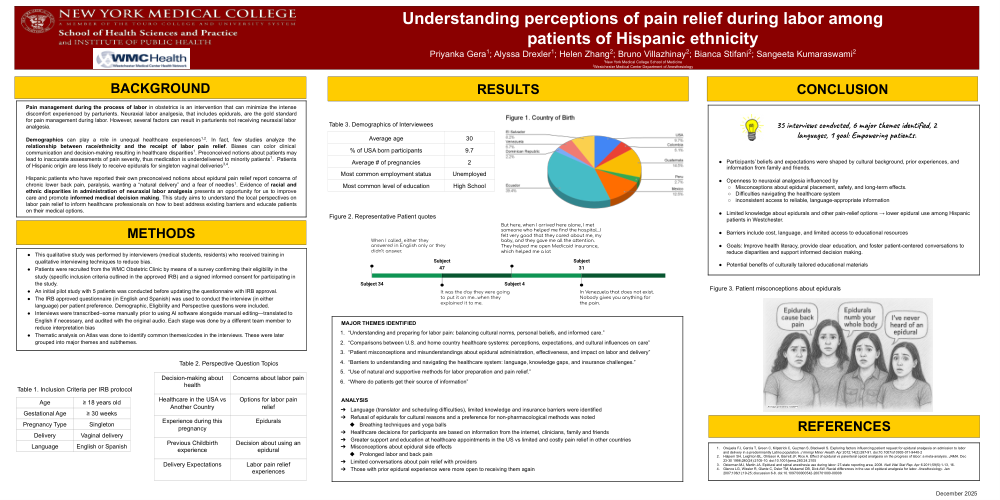
“Understanding and preparing for labor pain: balancing cultural norms, personal beliefs, and informed care.”
-
“Comparisons between U.S. and home country healthcare systems: perceptions, expectations, and cultural influences on care”
-
“Patient misconceptions and misunderstandings about epidural administration, effectiveness, and impact on labor and delivery”
-
“Barriers to understanding and navigating the healthcare system: language, knowledge gaps, and insurance challenges.”
-
“Use of natural and supportive methods for labor preparation and pain relief.”
-
“Where do patients get their source of information”
ANALYSIS
-
Language (translator and scheduling difficulties), limited knowledge and insurance barriers were identified
-
Refusal of epidurals for cultural reasons and a preference for non-pharmacological methods was noted
-
Breathing techniques and yoga balls
-
Healthcare decisions for participants are based on information from the internet, clinicians, family and friends
-
Greater support and education at healthcare appointments in the US vs limited and costly pain relief in other countries
-
Misconceptions about epidural side effects
-
Prolonged labor and back pain
-
Limited conversations about pain relief with providers
-
Those with prior epidural experience were more open to receiving them again
-
Participants’ beliefs and expectations were shaped by cultural background, prior experiences, and information from family and friends.
-
Openness to neuraxial analgesia influenced by
-
Misconceptions about epidural placement, safety, and long-term effects.
-
Difficulties navigating the healthcare system
-
inconsistent access to reliable, language-appropriate information
-
Limited knowledge about epidurals and other pain-relief options → lower epidural use among Hispanic patients in Westchester.
-
Barriers include cost, language, and limited access to educational resources
-
Goals: Improve health literacy, provide clear education, and foster patient-centered conversations to reduce disparities and support informed decision making.
-
Potential benefits of culturally tailored educational materials