358 posters, 97 topics, 122 sessions, 958 authors, 239 institutions
ePostersLive by SciGen Technologies S.A. All rights reserved.
79th PostGraduate Assembly in Anesthesiology 2025
December 12 - 15, 2025 | New York City

2232
Roc''d by Anaphylaxis, Saved by Sugammadex
Poster Presenter
Part of Topic
Critical Care - Perioperative Management
“Roc’d” by Anaphylaxis, Saved by Sugammadex
Alexander Mai MPH MSII1, Alec Hendon MD2, Julie M. Mani MD2
1Sam Houston State University College of Osteopathic Medicine
2Department of Anesthesiology and Perioperative Medicine, The University of Texas MD Anderson Cancer Center, Houston, TX
Introduction Anaphylaxis is a severe multisystem allergic phenomenon.
Nondepolarizing neuromuscular blocking drugs such as rocuronium
is the culprit in 60 - 70% of anesthetic medication reactions.
Sugammadex is a drug that reverses rocuronium by encapsulating
the drug & preventing binding to acetylcholine receptors. This case
tests the hypothesis that Sugammadex may aid in removing
rocuronium antigens or lessening its Ach R interaction in the event of
suspected rocuronium-induced anaphylaxis.
Case Background
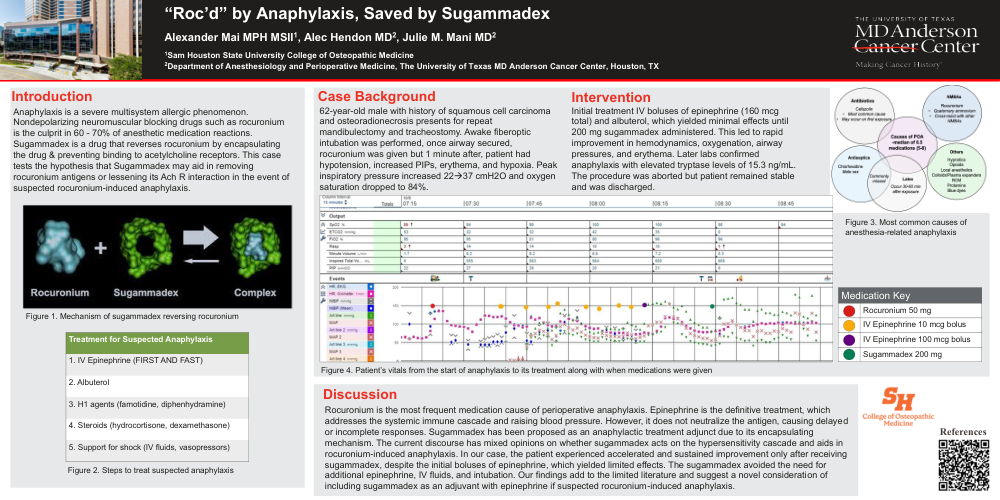
62-year-old male with history of squamous cell carcinoma
and osteoradionecrosis presents for repeat
mandibulectomy and tracheostomy. Awake fiberoptic
intubation was performed, once airway secured,
rocuronium was given but 1 minute after, patient had
hypotension, increased PIPs, erythema, and hypoxia. Peak
inspiratory pressure increased 22→37 cmH2O and oxygen
saturation dropped to 84%.
Intervention
Initial treatment IV boluses of epinephrine (160 mcg
total) and albuterol, which yielded minimal effects until
200 mg sugammadex administered. This led to rapid
improvement in hemodynamics, oxygenation, airway
pressures, and erythema. Later labs confirmed
anaphylaxis with elevated tryptase levels of 15.3 ng/mL.
The procedure was aborted but patient remained stable
and was discharged.
Figure 3. Most common causes of
anesthesia-related anaphylaxis
Medication Key
Rocuronium 50 mg
Figure 1. Mechanism of sugammadex reversing rocuronium
IV Epinephrine 10 mcg bolus
Treatment for Suspected Anaphylaxis
IV Epinephrine 100 mcg bolus
Sugammadex 200 mg
1. IV Epinephrine (FIRST AND FAST)
Figure 4. Patient’s vitals from the start of anaphylaxis to its treatment along with when medications were given
2. Albuterol
3. H1 agents (famotidine, diphenhydramine)
4. Steroids (hydrocortisone, dexamethasone)
5. Support for shock (IV fluids, vasopressors)
Figure 2. Steps to treat suspected anaphylaxis
Discussion
Rocuronium is the most frequent medication cause of perioperative anaphylaxis. Epinephrine is the definitive treatment, which
addresses the systemic immune cascade and raising blood pressure. However, it does not neutralize the antigen, causing delayed
or incomplete responses. Sugammadex has been proposed as an anaphylactic treatment adjunct due to its encapsulating
mechanism. The current discourse has mixed opinions on whether sugammadex acts on the hypersensitivity cascade and aids in
rocuronium-induced anaphylaxis. In our case, the patient experienced accelerated and sustained improvement only after receiving
sugammadex, despite the initial boluses of epinephrine, which yielded limited effects. The sugammadex avoided the need for
additional epinephrine, IV fluids, and intubation. Our findings add to the limited literature and suggest a novel consideration of
including sugammadex as an adjuvant with epinephrine if suspected rocuronium-induced anaphylaxis.