226 posters, 5 topics, 20 sessions, 599 authors, 292 institutions
ePostersLive by SciGen Technologies S.A. All rights reserved.
Obstetric Anaesthesia Annual Scientific Meeting 2026
14-15 May 2026 | Liverpool Convention Centre

7163791
Gowns off for single shot obstetric spinal anaesthesia: a quality improvement project with an environmental focus
Poster Presenter
Authors
Affiliations
Part of Topic
Quality Improvement
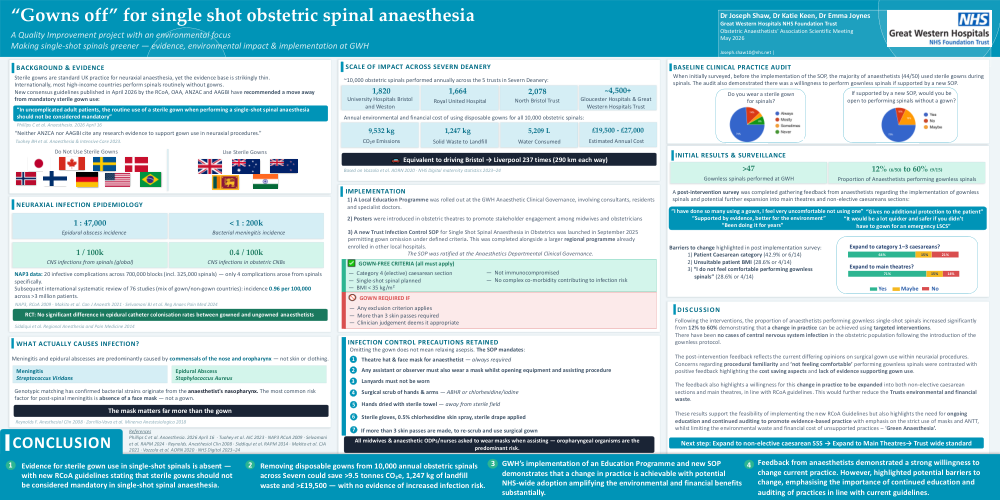
"Gowns off" for single shot obstetric spinal anaesthesia Dr Katie Keen, Dr Emma Joynes, Dr Joseph Shaw — Great Western Hospitals NHS Foundation Trust Obstetric Anaesthetists' Association Scientific Meeting, May 2026
Background: Sterile gowns are standard UK practice for neuraxial anaesthesia, yet the evidence base is strikingly thin. Most high-income countries internationally perform spinals routinely without gowns. New consensus guidelines published in April 2026 by the RCoA, OAA, ANZCA and AAGBI recommend that sterile gowns should not be considered mandatory for single-shot spinal anaesthesia in uncomplicated adult patients.
Epidemiology & Cause of Infection: Central nervous system infection following spinal anaesthesia is rare (0.4 per 100,000 in obstetric central neuraxial blocks). Infection is predominantly caused by oropharyngeal commensals — the face mask is the most critical protective measure, not the gown.
Environmental & Financial Impact: Approximately 10,000 obstetric spinals are performed annually across five trusts in the Severn Deanery. Removing disposable gowns from all these procedures could save over 9,500 kg CO₂e, 1,247 kg of landfill waste, and between £19,500–£27,000 annually.
Implementation at GWH: A local education programme, theatre posters, and a new Trust Infection Control SOP were introduced in September 2025, permitting gown omission for eligible elective (category 4) caesarean sections. Full aseptic technique, including mask, sterile gloves, chlorhexidine skin preparation, and sterile drape is retained throughout.
Results: Over 47 gownless spinals have been performed at GWH. The proportion of anaesthetists performing gownless spinals increased from 12% to 60% following the interventions. There have been no cases of central nervous system infection since the introduction of the protocol.
Conclusion: Evidence for routine sterile gown use in single-shot spinal anaesthesia is absent, and new RCoA guidelines reflect this. Removing gowns is safe, environmentally beneficial, and financially advantageous. GWH's implementation demonstrates this change is achievable, with NHS-wide adoption offering substantially amplified benefits.