226 posters, 5 topics, 20 sessions, 599 authors, 292 institutions
ePostersLive by SciGen Technologies S.A. All rights reserved.
Obstetric Anaesthesia Annual Scientific Meeting 2026
14-15 May 2026 | Liverpool Convention Centre

7147245
From 'no epidural' to 'why not?': transforming labor ward culture through education
Poster Presenter
Authors
Affiliations
Part of Topic
Quality Improvement
Introduction:
Labour epidural analgesia is highly effective for managing labour pain, but its use in Saudi Arabia remains low due to cultural beliefs, misinformation, and inconsistent counselling [1],[2].
This project assessed whether educating obstetricians and midwives could increase epidural requests and improve patient care.
Methodology:
This retrospective cohort study was reviewed by the KAU Ethics Board and did not require patient consent in accordance with institutional ethical guidelines.
Intervention:A multidisciplinary focus group comprising an obstetrician, a midwife, and an anesthesiologist met to identify barriers to labor epidural requests. In June 2018, an educational session was delivered to labor room staff, addressing key concerns identified by the focus group and incorporating current evidence on labor epidural analgesia.
Data Collection:Midwives maintained labor room records documenting epidural eligibility, placement, refusal, and barriers to insertion.
Analysis:Interrupted time-series segmented regression was used to evaluate changes in epidural utilization, patient refusal rates, and missed orders
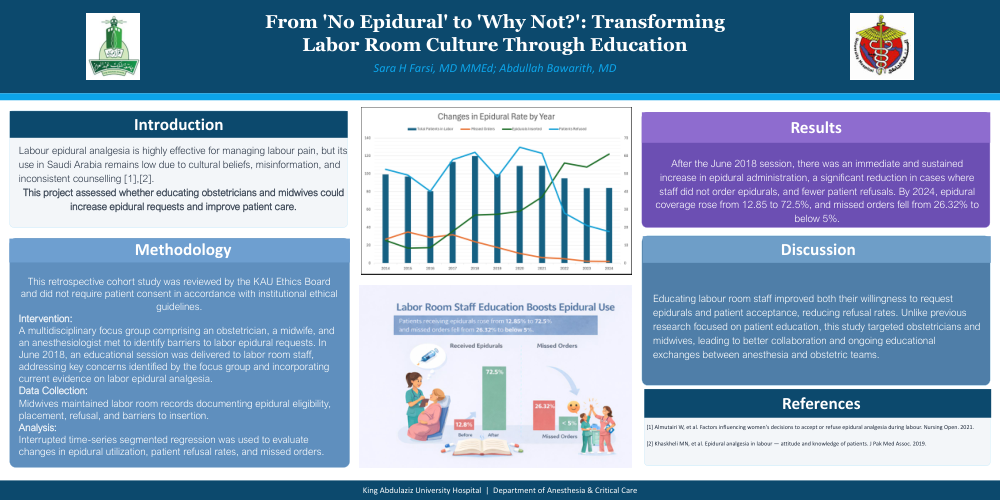
Results:After the June 2018 session, there was an immediate and sustained increase in epidural administration, a significant reduction in cases where staff did not order epidurals, and fewer patient refusals. By 2024, epidural coverage rose from 12.85 to 72.5%, and missed orders fell from 26.32% to below 5%.
Discussion:Educating labour room staff improved both their willingness to request epidurals and patient acceptance, reducing refusal rates. Unlike previous research focused on patient education, this study targeted obstetricians and midwives, leading to better collaboration and ongoing educational exchanges between anesthesia and obstetric teams.
References:
[1] Almutairi W, et al. Factors influencing women's decisions to accept or refuse epidural analgesia during labour. Nursing Open. 2021.
[2] Khaskheli MN, et al. Epidural analgesia in labour — attitude and knowledge of patients. J Pak Med Assoc. 2019.