226 posters, 5 topics, 20 sessions, 599 authors, 292 institutions
ePostersLive by SciGen Technologies S.A. All rights reserved.
Obstetric Anaesthesia Annual Scientific Meeting 2026
14-15 May 2026 | Liverpool Convention Centre

7162475
Post-operative analgesia and opioid use after caesarean section
Part of Topic
Quality Improvement
POSTOPERATIVE ANALGESIA AND OPIOID USE AFTER CAESAREAN SECTION
Emma Durrant, Catherine Collinson
Introduction
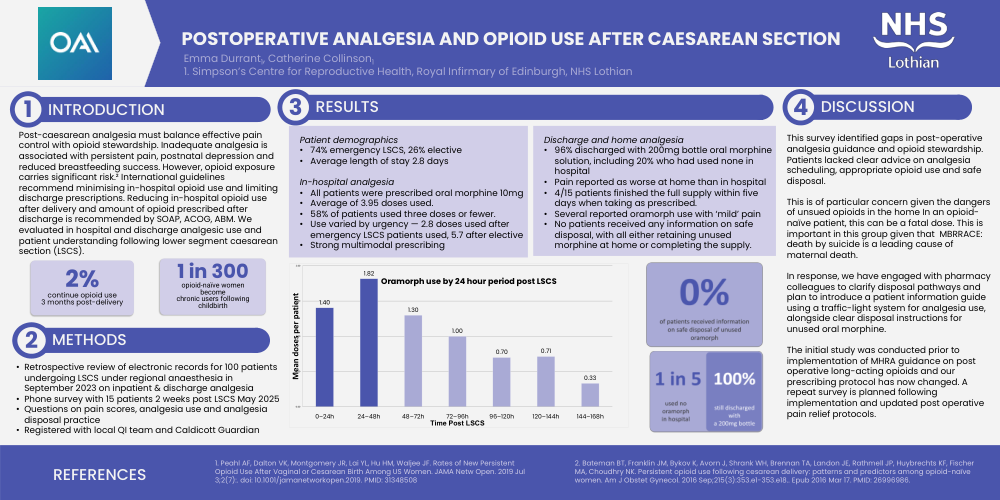
Post-caesarean analgesia must balance effective pain control with opioid stewardship. Inadequate analgesia is associated with persistent pain, postnatal depression and reduced breastfeeding success. However, opioid exposure carries significant risk.² International guidelines recommend minimising in-hospital opioid use and limiting discharge prescriptions. Reducing in-hospital opioid use after delivery and amount of opioid prescribed after discharge is recommended by SOAP, ACOG, ABM. We evaluated in hospital and discharge analgesic use and patient understanding following lower segment caesarean section (LSCS).
Methods
Results
Patient demographics
In-hospital analgesia
Discharge and home analgesia
This survey identified gaps in post-operative analgesia guidance and opioid stewardship. Patients lacked clear advice on analgesia scheduling, appropriate opioid use and safe disposal. This is of particular concern given the dangers of unsued opioids in the home In an opioid-naïve patient, this can be a fatal dose. This is important in this group given that MBRRACE: death by suicide is a leading cause of maternal death. In response, we have engaged with pharmacy colleagues to clarify disposal pathways and plan to introduce a patient information guide using a traffic-light system for analgesia use, alongside clear disposal instructions for unused oral morphine. The initial study was conducted prior to implementation of MHRA guidance on post operative long acting opioids and our prescribing protocol has now changed. A repeat survey is planned following implementation and updated post operative pain relief protocols.