226 posters, 5 topics, 20 sessions, 599 authors, 292 institutions
ePostersLive by SciGen Technologies S.A. All rights reserved.
Obstetric Anaesthesia Annual Scientific Meeting 2026
14-15 May 2026 | Liverpool Convention Centre

7159195
Barriers to postnatal follow up after obstetric anaesthetic intervention: a survey of obstetric anaesthetists
Poster Presenter
Authors
Nicholas Yau, Sze Ki So, Madeleine Lawrence, Manju Sharma, Neel Desai
Affiliations
Part of Topic
Surveys
Barriers to postnatal follow up after obstetric anaesthetic intervention: a survey of obstetric anaesthetists
N. Yau, S.K. So, M. Lawrence, M.Sharma, N.Desai Department of Anaesthesia, Guy’s and St Thomas’ NHS Foundation Trust
Introduction
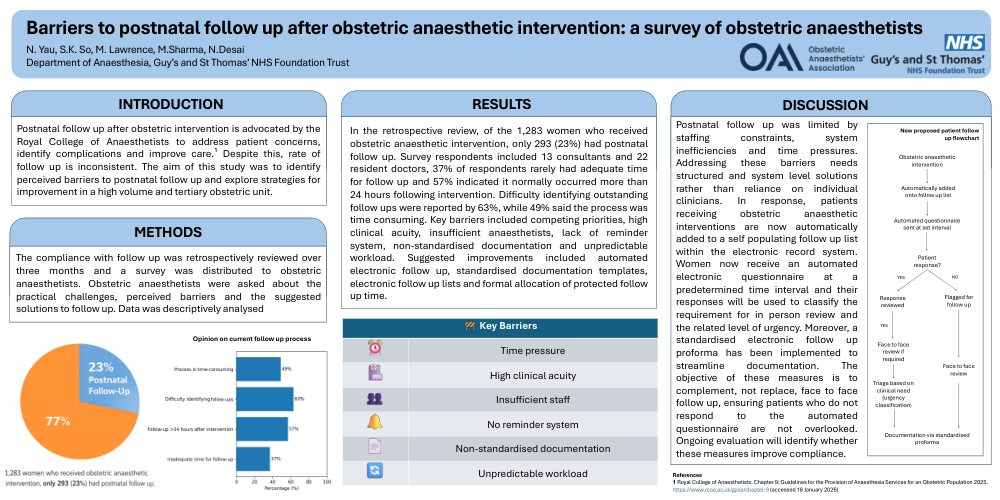
Postnatal follow up after obstetric intervention is advocated by the Royal College of Anaesthetists to address patient concerns, identify complications and improve care. ¹ Despite this, rate of follow up is inconsistent. The aim of this study was to identify perceived barriers to postnatal follow up and explore strategies for improvement in a high volume and tertiary obstetric unit.
Methods
The compliance with follow up was retrospectively reviewed over three months and a survey was distributed to obstetric anaesthetists. Obstetric anaesthetists were asked about the practical challenges, perceived barriers and the suggested solutions to follow up. Data was descriptively analysed.
Results
In the retrospective review, of the 1,283 women who received obstetric anaesthetic intervention, only 293 (23%) had postnatal follow up. Survey respondents included 13 consultants and 22 resident doctors, 37% of respondents rarely had adequate time for follow up and 57% indicated it normally occurred more than 24 hours following intervention. Difficulty identifying outstanding follow ups were reported by 63%, while 49% said the process was time consuming. Key barriers included competing priorities, high clinical acuity, insufficient anaesthetists, lack of reminder system, non-standardised documentation and unpredictable workload. Suggested improvements included automated electronic follow up, standardised documentation templates, electronic follow up lists and formal allocation of protected follow up time.
Discussion
Postnatal follow up was limited by staffing constraints, system inefficiencies and time pressures. Addressing these barriers needs structured and system level solutions rather than reliance on individual clinicians. In response, patients receiving obstetric anaesthetic interventions are now automatically added to a self populating follow up list within the electronic record system. Women now receive an automated electronic questionnaire at a predetermined time interval and their responses will be used to classify the requirement for in person review and the related level of urgency. Moreover, a standardised electronic follow up proforma has been implemented to streamline documentation. The objective of these measures is to complement, not replace, face to face follow up, ensuring patients who do not respond to the automated questionnaire are not overlooked. Ongoing evaluation will identify whether these measures improve compliance.
References
1. Royal College of Anaesthetists. Chapter 9: Guidelines for the Provision of Anaesthesia Services for an Obstetric Population 2025. https://www.rcoa.ac.uk/gpas/chapter-9 (accessed 18 January 2026)