226 posters, 5 topics, 20 sessions, 599 authors, 292 institutions
ePostersLive by SciGen Technologies S.A. All rights reserved.
Obstetric Anaesthesia Annual Scientific Meeting 2026
14-15 May 2026 | Liverpool Convention Centre

7158322
Introduction of a night shift huddle on labour ward to improve communication, safety and team-working
Poster Presenter
Authors
Affiliations
Part of Topic
Quality Improvement
Introduction of a Night Shift Huddle on Labour Ward to Improve Communication, Safety and Team-Working
Introduction
Night shift on labour ward carries inherent risk through multidisciplinary team working in an unscheduled, rapidly evolving and often time critical environment out-of-hours. Furthermore, night working is a well-established risk factor for increasing the chance of errors. Human factors are the most common root cause of adverse obstetric events and therefore the world health organisation (WHO) recommends initiatives to mitigate against miscommunication and encourage team-working to promote safety and good quality care. [1] Whilst handovers are common practice these do not routinely include all staff working at night, therefore important communication may occur either informally or late. Effective communication can reduce errors and near miss events as well as foster a culture of safety. [2]
Aims
We introduced a structured multidisciplinary night-time huddle with the aim of improving communication, teamwork and safety in obstetric theatres.
Methods
No ethical approval was required as no patient data was collected.
Peer review was undertaken by involvement of senior anaesthetists, obstetric consultants and midwifery leads.
A survey was piloted to assess appetite for the huddle.
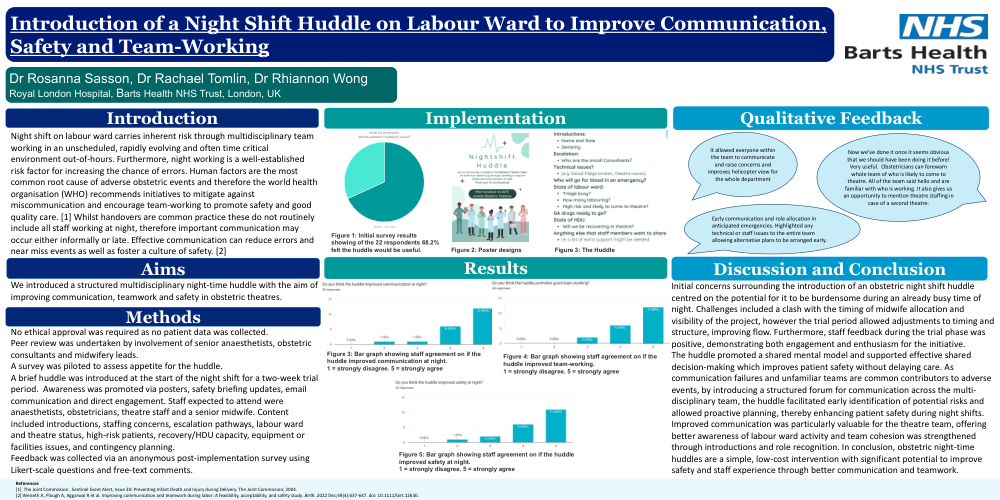
A brief huddle was introduced at the start of the night shift for a two-week trial period. Awareness was promoted via posters, safety briefing updates, email communication and direct engagement. Staff expected to attend were anaesthetists, obstetricians, theatre staff and a senior midwife. Content included introductions, staffing concerns, escalation pathways, labour ward and theatre status, high-risk patients, recovery/HDU capacity, equipment or facilities issues, and contingency planning.
Feedback was collected via an anonymous post-implementation survey using Likert-scale questions and free-text comments.
Results
as displayed
Discussion and Conclusion
Initial concerns surrounding the introduction of an obstetric night shift huddle centred on the potential for it to be burdensome during an already busy time of night. Challenges included a clash with the timing of midwife allocation and visibility of the project, however the trial period allowed adjustments to timing and structure, improving flow. Furthermore, staff feedback during the trial phase was positive, demonstrating both engagement and enthusiasm for the initiative.
The huddle promoted a shared mental model and supported effective shared decision-making which improves patient safety without delaying care. As communication failures and unfamiliar teams are common contributors to adverse events, by introducing a structured forum for communication across the multi-disciplinary team, the huddle facilitated early identification of potential risks and allowed proactive planning, thereby enhancing patient safety during night shifts.
Improved communication was particularly valuable for the theatre team, offering better awareness of labour ward activity and team cohesion was strengthened through introductions and role recognition. In conclusion, obstetric night-time huddles are a simple, low-cost intervention with significant potential to improve safety and staff experience through better communication and teamwork.