150 posters, 16 sessions, 294 authors, 70 institutions
ePostersLive by SciGen Technologies S.A. All rights reserved.
Obstetric Anaesthesia Annual Scientific Meeting 2024
Thursday 9 - Friday 10 May 2024, Birmingham

6301079
Severe malaria infection and sickle cell crisis in a parturient
Poster Presenter
Authors
Affiliations
null,
Part of Topic
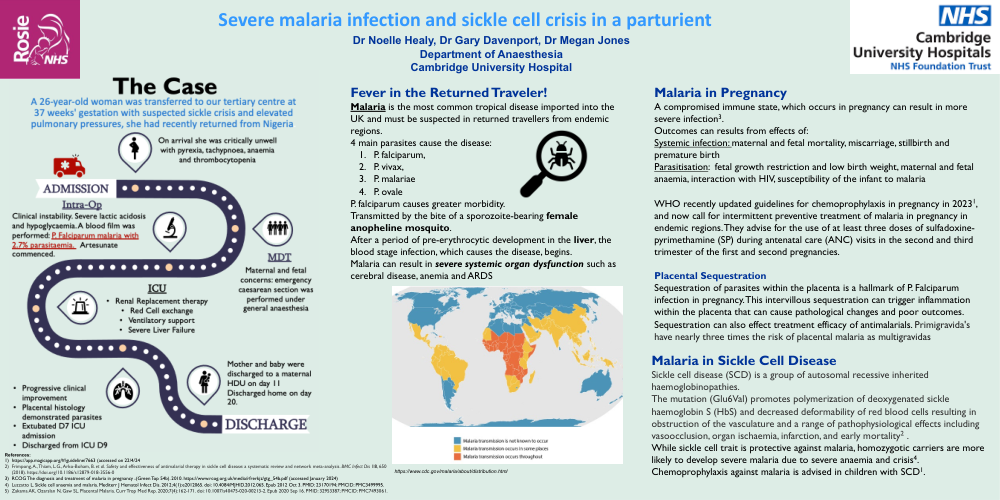
Fever in the Returned Traveler!
Malaria is the most common tropical disease imported into the UK and must be suspected in returned travellers from endemic regions.
4 main parasites cause the disease:
P. falciparum causes greater morbidity.
Transmitted by the bite of a sporozoite-bearing female anopheline mosquito.
After a period of pre-erythrocytic development in the liver, the blood stage infection, which causes the disease, begins.
Malaria can result in severe systemic organ dysfunction such as cerebral disease, anemia and ARDS
Malaria in Pregnancy
A compromised immune state, which occurs in pregnancy can result in more severe infection3.
Outcomes can results from effects of:
Systemic infection: maternal and fetal mortality, miscarriage, stillbirth and premature birth
Parasitisation: fetal growth restriction and low birth weight, maternal and fetal anaemia, interaction with HIV, susceptibility of the infant to malaria
WHO recently updated guidelines for chemoprophylaxis in pregnancy in 20231, and now call for intermittent preventive treatment of malaria in pregnancy in endemic regions. They advise for the use of at least three doses of sulfadoxine-pyrimethamine (SP) during antenatal care (ANC) visits in the second and third trimester of the first and second pregnancies.
Placental Sequestration
Sequestration of parasites within the placenta is a hallmark of P. Falciparum infection in pregnancy. This intervillous sequestration can trigger inflammation within the placenta that can cause pathological changes and poor outcomes.
Sequestration can also effect treatment efficacy of antimalarials. Primigravida's have nearly three times the risk of placental malaria as multigravidas
Malaria in Sickle Cell Disease
Sickle cell disease (SCD) is a group of autosomal recessive inherited haemoglobinopathies.
The mutation (Glu6Val) promotes polymerization of deoxygenated sickle haemoglobin S (HbS) and decreased deformability of red blood cells resulting in obstruction of the vasculature and a range of pathophysiological effects including vasoocclusion, organ ischaemia, infarction, and early mortality2 .
While sickle cell trait is protective against malaria, homozygotic carriers are more likely to develop severe malaria due to severe anaemia and crisis4. Chemoprophylaxis against malaria is advised in children with SCD1.