150 posters, 16 sessions, 294 authors, 70 institutions
ePostersLive by SciGen Technologies S.A. All rights reserved.
Obstetric Anaesthesia Annual Scientific Meeting 2024
Thursday 9 - Friday 10 May 2024, Birmingham

6290914
14 year review of the anaesthetic management of the parturient with spina bifida
Poster Presenter
Authors
Affiliations
null,
Part of Topic
Introduction
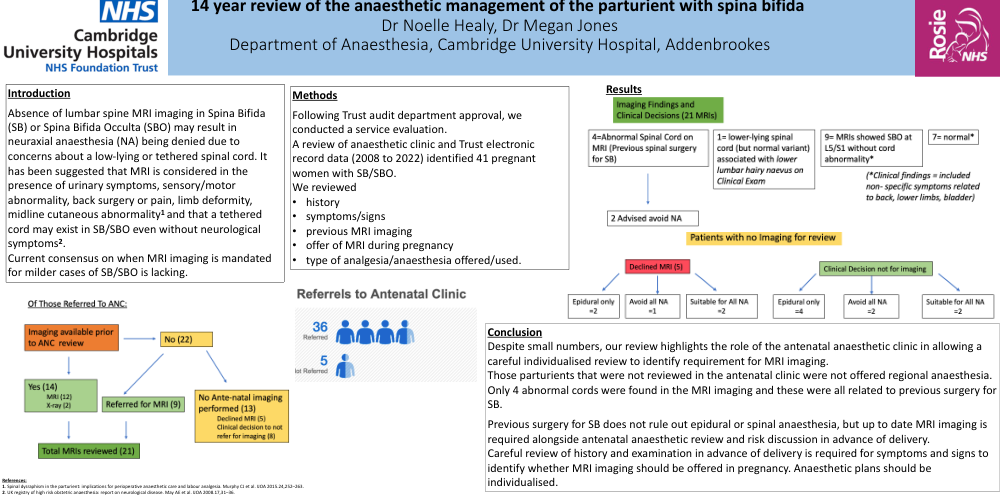
Absence of lumbar spine MRI imaging in Spina Bifida (SB) or Spina Bifida Occulta (SBO) may result in neuraxial anaesthesia (NA) being denied due to concerns about a low-lying or tethered spinal cord. It has been suggested that MRI is considered in the presence of urinary symptoms, sensory/motor abnormality, back surgery or pain, limb deformity, midline cutaneous abnormality1 and that a tethered cord may exist in SB/SBO even without neurological symptoms2.
Current consensus on when MRI imaging is mandated for milder cases of SB/SBO is lacking.
Methods
Following Trust audit department approval, we conducted a service evaluation.
A review of anaesthetic clinic and Trust electronic record data (2008 to 2022) identified 41 pregnant women with SB/SBO.
We reviewed
Conclusion
Despite small numbers, our review highlights the role of the antenatal anaesthetic clinic in allowing a careful individualised review to identify requirement for MRI imaging.
Those parturients that were not reviewed in the antenatal clinic were not offered regional anaesthesia.
Only 4 abnormal cords were found in the MRI imaging and these were all related to previous surgery for SB.
Previous surgery for SB does not rule out epidural or spinal anaesthesia, but up to date MRI imaging is required alongside antenatal anaesthetic review and risk discussion in advance of delivery.
Careful review of history and examination in advance of delivery is required for symptoms and signs to identify whether MRI imaging should be offered in pregnancy. Anaesthetic plans should be individualised.