150 posters, 16 sessions, 294 authors, 70 institutions
ePostersLive by SciGen Technologies S.A. All rights reserved.
Obstetric Anaesthesia Annual Scientific Meeting 2024
Thursday 9 - Friday 10 May 2024, Birmingham

6280810
Incidental surgery during pregnancy and sugammadex usage - a four year retrospective review
Poster Presenter
Part of Topic
Introduction
The use of sugammadex within anaesthetic practice has become widespread over recent years, due to its efficacy in reversing aminosteroid-induced neuromuscular blockade1. However, 2019 Society for Obstetric Anesthesia and Perinatology (SOAP) guidelines recommend avoiding sugammadex during ongoing pregnancies due concerns regarding progesterone encapsulation2. Around 1% of parturients will require non-obstetric surgery during pregnancy3.
Aim
We aimed to investigate outcomes following reversal of neuromuscular blockade in patients undergoing incidental surgery in pregnancy
Methods
All female patients of childbearing age (age 15-45) undergoing surgery within NHS Greater Glasgow and Clyde between 1st July 2018 to 30th June 2022 were retrospectively identified from the electronic theatre booking system (Centricity™ Opera, General Electric Healthcare). Using birth registry data from the maternity electronic notes system (BadgerNet™, Clevermed), we then identified patients undergoing surgery in the 9 months prior to pregnancy completion. Patient notes were then examined determine pregnancy status at the time of surgery, demographics, anaesthetic technique and neonatal outcomes.
Results are presented as median [IQR] or by count (%). Statistical analysis was via Kruskal-Wallis rank sum test and Fisher's exact test, using R software.
Caldicott guardianship was obtained and requirement for ethical approval waived by the local research ethics committee.
Results
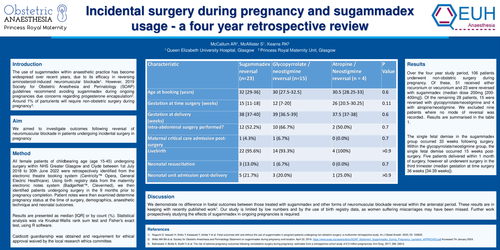
Over the four year study period, 106 patients underwent non-obstetric surgery during pregnancy. Of these, 51 received either rocuronium or vecuronium and 23 were reversed with sugammadex (median dose 200mg [200-400mg]). Of the remaining 28 patients, 15 were reversed with glycopyrrolate/neostigmine and 4 with atropine/neostigmine. We excluded nine patients where no mode of reversal was recorded.. Results are summarised in the table 1.
The single fetal demise in the sugammadex group occurred 33 weeks following surgery. Within the glycopyrrolate/neostigmine group, the single fetal demise occurred 15 weeks post-surgery. Five patients delivered within 1 month of surgery, however all underwent surgery in the third trimester (median gestation at time surgery 36 weeks [34-39 weeks]).
Discussion
We demonstrate no difference in foetal outcomes between those treated with sugammadex and other forms of neuromuscular blockade reversal within the antenatal period. These results are in keeping with recently published work1. Our study is limited by low numbers and by the use of birth registry data, as women suffering miscarriages may have been missed. Further work prospectively studying the effects of sugammadex in ongoing pregnancies is required.
References