150 posters, 16 sessions, 294 authors, 70 institutions
ePostersLive by SciGen Technologies S.A. All rights reserved.
Obstetric Anaesthesia Annual Scientific Meeting 2024
Thursday 9 - Friday 10 May 2024, Birmingham

6275602
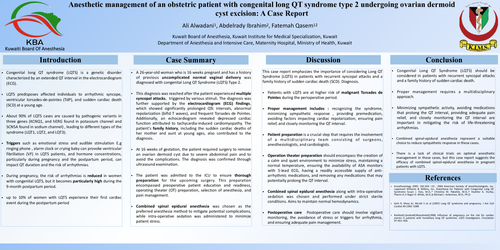
Anesthetic management of a pregnant patient with congenital long QT syndrome type 2 undergoing ovarian dermoid cyst excision: A Case Report
Poster Presenter
Authors
Part of Topic
Title : Anesthetic management of an obstetric patient with congenital long QT syndrome type 2 undergoing ovarian dermoid cyst excision: A Case Report
Introduction:
- Congenital long QT syndrome (LQTS) is a genetic disorder characterized by an extended QT interval in the electrocardiogram (ECG).
- LQTS predisposes affected individuals to arrhythmic syncope, ventricular torsades-de-pointes (TdP), and sudden cardiac death (SCD) at a young age.
- About 90% of LQTS cases are caused by pathogenic variants in three genes (KCNQ1, and hERG found in potassium channel and SCN5A found in sodium channel) , leading to different types of the syndrome (LQT1, LQT2, and LQT3).
- Triggers such as emotional stress and audible stimulation E.g ringing phone , alarm clock or crying baby can provoke ventricular fibrillation (VF) in LQTS patients, and hormone concentrations, particularly during pregnancy and the postpartum period, can impact QT duration and the risk of arrhythmias.
- During pregnancy, the risk of arrhythmias is reduced in women with congenital LQTS, but it becomes particularly high during the 9-month postpartum period.
- up to 10% of women with LQTS experience their first cardiac event during the postpartum period
Conclusion:-
- Congenital Long QT Syndrome (LQTS) should be considered in patients with recurrent syncopal attacks and a family history of sudden cardiac death.
- Proper management requires a multidisciplinary approach.
- Minimizing sympathetic activity, avoiding medications that prolong the QT interval, providing adequate pain relief, and closely monitoring the QT interval are important in mitigating the risk of life-threatening arrhythmias.
- Combined spinal-epidural anesthesia represent a suitable choice to reduce sympathetic response in these cases.
- There is a lack of clinical trials on optimal anesthetic management in these cases, but this case report suggests the efficacy of combined spinal-epidural anesthesia in pregnant patients with LQTS.