150 posters, 16 sessions, 294 authors, 70 institutions
ePostersLive by SciGen Technologies S.A. All rights reserved.
Obstetric Anaesthesia Annual Scientific Meeting 2024
Thursday 9 - Friday 10 May 2024, Birmingham

6301534
Thrombocytopenia and Anaemia - A less common cause
Poster Presenter
Authors
Affiliations
Part of Topic
Thrombocytopenia and Anaemia - A Less Common Cause
Introduction
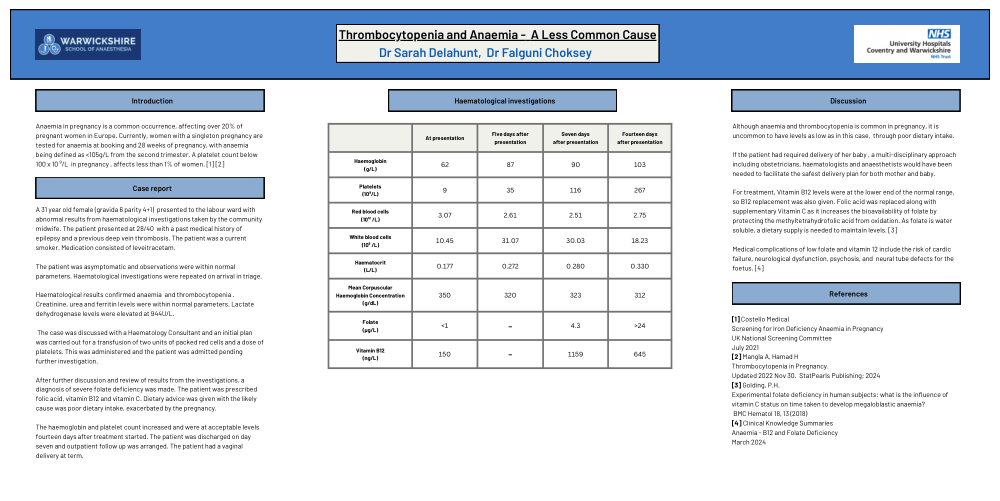
Anaemia in pregnancy is a common occurrence, affecting over 20% of pregnant women in Europe. Currently, women with a singleton pregnancy are tested for anaemia at booking and 28 weeks of pregnancy, with anaemia being defined as <105g/L from the second trimester. A platelet count below 100 x 10 ⁹/L in pregnancy , affects less than 1% of women. [1] [2]
Case report
A 31 year old female (gravida 6 parity 4+1) presented to the labour ward with abnormal results from haematological investigations taken by the community midwife. The patient presented at 28/40 with a past medical history of epilepsy and a previous deep vein thrombosis. The patient was a current smoker. Medication consisted of leveitracetam. The patient was asymptomatic and observations were within normal parameters. Haematological investigations were repeated on arrival in triage. Haematological results confirmed anaemia and thrombocytopenia . Creatinine, urea and ferritin levels were within normal parameters. Lactate dehydrogenase levels were elevated at 944U/L. The case was discussed with a Haematology Consultant and an initial plan was carried out for a transfusion of two units of packed red cells and a dose of platelets. This was administered and the patient was admitted pending further investigation. After further discussion and review of results from the investigations, a diagnosis of severe folate deficiency was made. The patient was prescribed folic acid, vitamin B12 and vitamin C. Dietary advice was given with the likely cause was poor dietary intake, exacerbated by the pregnancy. The haemoglobin and platelet count increased and were at acceptable levels fourteen days after treatment started. The patient was discharged on day seven and outpatient follow up was arranged. The patient had a vaginal delivery at term.