150 posters, 16 sessions, 294 authors, 70 institutions
ePostersLive by SciGen Technologies S.A. All rights reserved.
Obstetric Anaesthesia Annual Scientific Meeting 2024
Thursday 9 - Friday 10 May 2024, Birmingham

6301874
An opiate in sheep's clothing? The impact of intrathecal opiate on length of stay following repair of perineal tears in the post-partum patient
Poster Presenter
Authors
Part of Topic
An opiate in sheep’s clothing? The impact of intrathecal opiate on length of stay following repair of perineal tears in the post-partum patient
L. Murray1, W. Long2, A.Marlborough3
1. CT3 Anaesthetics, Queen Elizabeth University Hospital Glasgow, 2. Clinical Research Fellow, University Hospital Crosshouse, 3. ST4 Anaesthetics, Forth Valley Royal Hospital
Introduction
Almost three percent of vaginal births result in a perineal tear requiring theatre intervention [1]. There is limited guidance and literature regarding the use of intrathecal opiates (ITO) to supplement regional anaesthesia for this. ITOs have the potential to impact maternal recovery, which can be assessed by length of stay (LoS) [2]. We aimed to assess the impact of the use of ITO.
Method
Three maternity units in the West of Scotland were retrospectively studied over a three year period. Data was collected from Badgernet. Third and fourth degree repairs were included.
Those who received a general anaesthetic, epidural top-up or had incomplete data were excluded.
Mann-Whitney U to assess change in LoS. Grade and sex of anaesthetist was collected & Chi-Squared analysis used to assess if this influenced decision to give ITO.
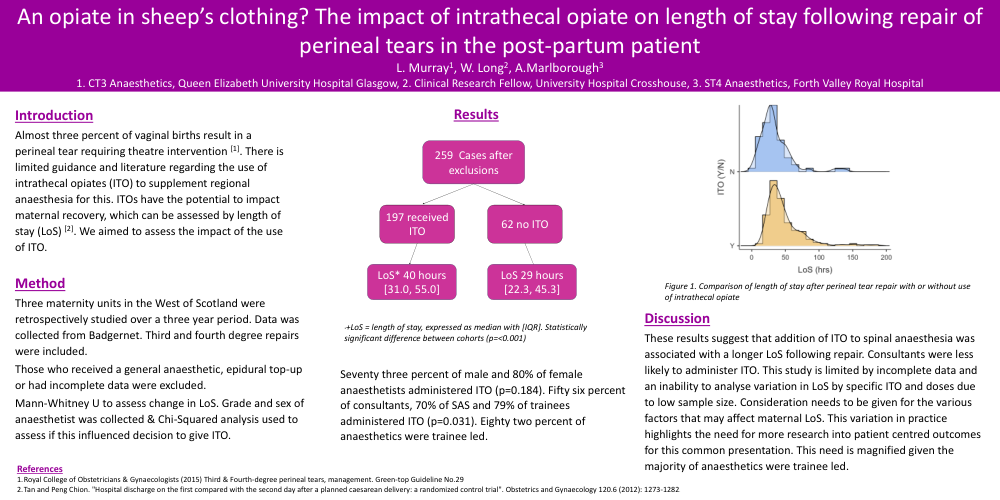
Seventy three percent of male and 80% of female anaesthetists administered ITO (p=0.184). Fifty six percent of consultants, 70% of SAS and 79% of trainees administered ITO (p=0.031). Eighty two percent of anaesthetics were trainee led.
Discussion
These results suggest that addition of ITO to spinal anaesthesia was associated with a longer LoS following repair. Consultants were less likely to administer ITO. This study is limited by incomplete data and an inability to analyse variation in LoS by specific ITO and doses due to low sample size. Consideration needs to be given for the various factors that may affect maternal LoS. This variation in practice highlights the need for more research into patient centred outcomes for this common presentation. This need is magnified given the majority of anaesthetics were trainee led.