150 posters, 16 sessions, 294 authors, 70 institutions
ePostersLive by SciGen Technologies S.A. All rights reserved.
Obstetric Anaesthesia Annual Scientific Meeting 2024
Thursday 9 - Friday 10 May 2024, Birmingham

6301031
The impact of constipation after elective caesarean section.
Poster Presenter
Authors
Affiliations
Part of Topic
The Impact of Constipation After Elective Caesarean Section
Dr Sarah Hudson, Dr Suni Halder, Dr Richard Skelly, Oxford University Hospitals NHS Foundation Trust
Introduction
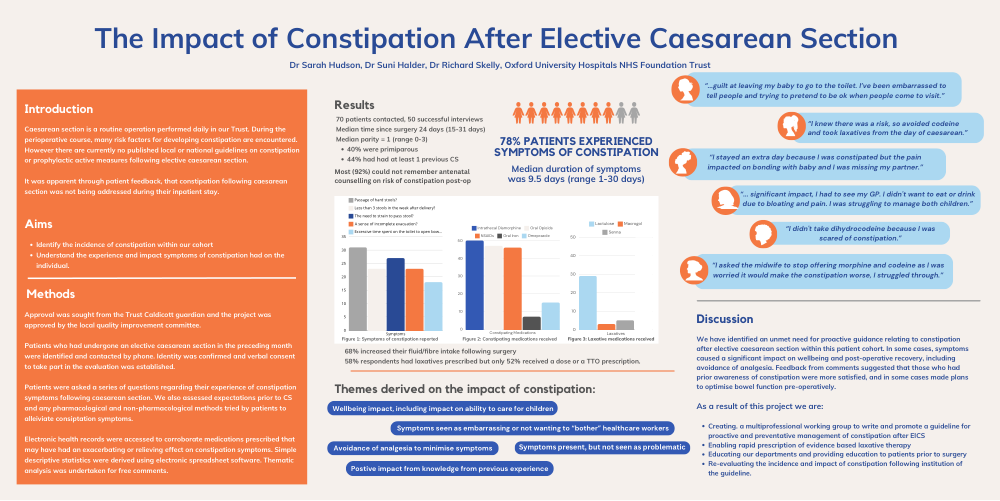
Caesarean section is a routine operation performed daily in our Trust. During the perioperative course, many risk factors for developing constipation are encountered. However there are currently no published local or national guidelines on constipation or prophylactic active measures following elective caesarean section. It was apparent through patient feedback, that constipation following caesarean section was not being addressed during their inpatient stay.
Aims
- Identify the incidence of constipation within our cohort
- Understand the experience and impact symptoms of constipation had on the individual.
Approval was sought from the Trust Caldicott guardian and the project was approved by the local quality improvement committee. Patients who had undergone an elective caesarean section in the preceding month were identified and contacted by phone. Identity was confirmed and verbal consent to take part in the evaluation was established. Patients were asked a series of questions regarding their experience of constipation symptoms following caesarean section. We also assessed expectations prior to CS and any pharmacological and non-pharmacological methods tried by patients to alleiviate consiptation symptoms. Electronic health records were accessed to corroborate medications prescribed that may have had an exacerbating or relieving effect on constipation symptoms. Simple descriptive statistics were derived using electronic spreadsheet software. Thematic analysis was undertaken for free comments.
Results
70 patients contacted, 50 successful interviews. Median time since surgery 24 days (15-31 days). Median parity = 1 (range 0-3), 40% were primiparous, 44% had had at least 1 previous CS.
78% patients experienced symptoms of constipation, Median duration of symptoms was 9.5 days (range 1-30 days).
68% increased their fluid/fibre intake following surgery
58% respondents had laxatives prescribed but only 52% received a dose or a TTO prescription.
Themes derived on the impact of constipation:
Wellbeing impact, including impact on ability to care for children.
Symptoms seen as embarrassing or not wanting to “bother” healthcare workers.
Avoidance of analgesia to minimise symptoms.
Symptoms present, but not seen as problematic.
Postive impact from knowledge from previous experience.
Discussion:
We have identified an unmet need for proactive guidance relating to constipation after elective caesarean section within this patient cohort. In some cases, symptoms caused a significant impact on wellbeing and post-operative recovery, including avoidance of analgesia. Feedback from comments suggested that those who had prior awareness of constipation were more satisfied, and in some cases made plans to optimise bowel function pre-operatively.
As a result of this project we are:
- Creating. a multiprofessional working group to write and promote a guideline for proactive and preventative management of constipation after ElCS
- Enabling rapid prescription of evidence based laxative therapy
- Educating our departments and providing education to patients prior to surgery
- Re-evaluating the incidence and impact of constipation following institution of the guideline.