150 posters, 16 sessions, 294 authors, 70 institutions
ePostersLive by SciGen Technologies S.A. All rights reserved.
Obstetric Anaesthesia Annual Scientific Meeting 2024
Thursday 9 - Friday 10 May 2024, Birmingham

6301668
Is TIVA in obstetrics an essential skill? An elective caesarean section in a patient with Multicore Myopathy Disease (MmD).
Poster Presenter
Part of Topic
Is TIVA in obstetrics an essential skill? An elective caesarean section in a patient with Multicore Myopathy Disease (MmD).
|
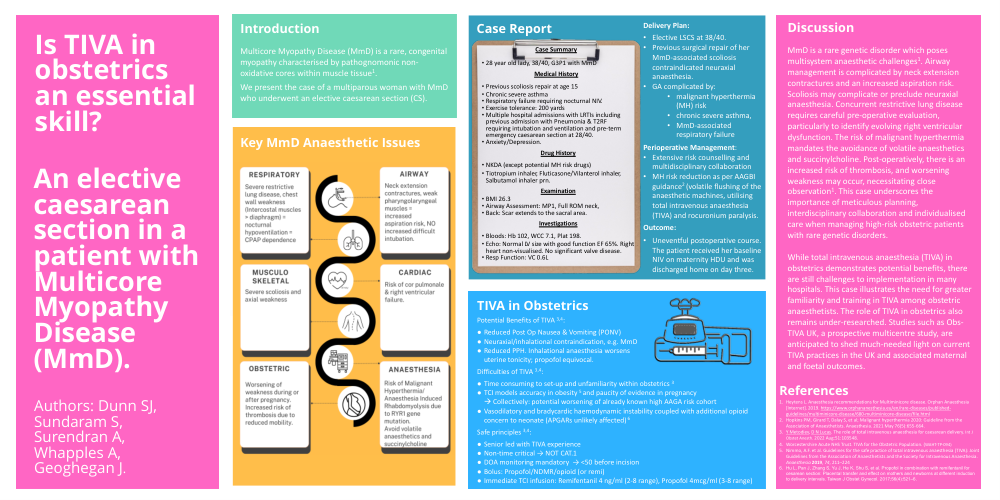
Introduction Multicore Myopathy Disease (MmD) is a rare, congenital myopathy characterised by pathognomonic non-oxidative cores within muscle tissue1. We present the case of a multiparous woman with MmD who underwent an elective caesarean section (CS). Case Report A 28 year old woman, para 1, with MmD underwent elective CS at 38/40. Neuraxial anaesthesia was contraindicated due to previous surgical repair of her MmD-associated scoliosis. General anaesthesia was complicated by the increased malignant hyperthermia (MH) risk due to a potential RYR1-gene mutation, chronic severe asthma, and MmD-associated respiratory failure requiring nocturnal non-invasive ventilation (NIV). She had previously delivered via emergency pre-term CS following an acute presentation with respiratory failure secondary to pneumonia requiring invasive ventilation. Perioperative management included careful pre-operative evaluation, counselling and multidisciplinary collaboration. As per AAGBI guidance2, the intraoperative MH risk was reduced by volatile-flushing of the anaesthetic machines and utilising total intravenous anaesthesia (TIVA) with rocuronium paralysis. The postoperative course was uneventful; the patient received her baseline NIV in the High Dependency Unit (HDU) initially and was discharged home on the third postoperative day. Discussion: MmD is a rare genetic disorder which poses multisystem anaesthetic challenges1. Airway management is potentially more difficult due to neck extension contractures and increased aspiration risk from pharyngolaryngeal muscle weakness. Scoliosis, especially post-surgical correction, commonly complicates or precludes neuraxial anaesthesia. Concurrent severe restrictive lung disease requires careful pre-operative evaluation, particularly to identify evolving right ventricular dysfunction. The increased risk of malignant hyperthermia mandates the avoidance of volatile anaesthetics and succinylcholine. Post-operatively, there is an increased risk of thrombosis, and worsening weakness may occur, necessitating close observation1. This case demonstrates the importance of meticulous planning, interdisciplinary collaboration, and individualised care in managing high-risk obstetric patients with rare genetic disorders. TIVA in obstetrics is still not routinely performed in many hospitals and our case highlights the need for more familiarity and training in TIVA. |