150 posters, 16 sessions, 294 authors, 70 institutions
ePostersLive by SciGen Technologies S.A. All rights reserved.
Obstetric Anaesthesia Annual Scientific Meeting 2024
Thursday 9 - Friday 10 May 2024, Birmingham

6302087
A severe case of puerperal sepsis related AKI
Poster Presenter
Authors
Affiliations
Part of Topic
A severe case of puerperal sepsis related AKI
Introduction:
Pregnancy related Acute Kidney Injury (Pr-AKI) can contribute to significant morbidity and mortality. Epidemiological patterns are evolving both in developing and developed countries, with increase in late pregnancy AKI (1). Intra-uterine death can contribute to sepsis and AKI and is both a cause and a consequence of Pr-AKI.
Case report:
- 32-year-old G6P4+1 at 29 weeks period of gestation, presented in June 2023 with reduced foetal movements and foul-smelling vaginal discharge and fever. No foetal heart rate was detectable.
- History of fever urinary incontinence and lower abdominal pain 5 days ago which was managed on oral antibiotics.
- Rapid deterioration within hours of presentation. Septic shock requiring vasopressors and lactate increased from 6.6 to 11.37 despite fluid resuscitation and vasopressors.
- Developed disseminated intravascular coagulopathy.
- Tripling of serum creatinine from 40 to 125. Required CRRT in ITU.
- Patient also developed dilated cardiomyopathy secondary to sepsis.
- Found to have E. coli in both urine and blood.
- Discharged from ITU after 8 days. Total hospital stay was for 21 days. Required regular intermittent dialysis sessions for 2 months.
- Currently she has stable renal functions, not on dialysis and left ventricular function has improved.
Discussion:
Difficult to define Pr-AKI
Causes may differ. While Pre-eclampsia is a more common cause in HICs, puerperal sepsis remains the most common cause in LMICs (2).
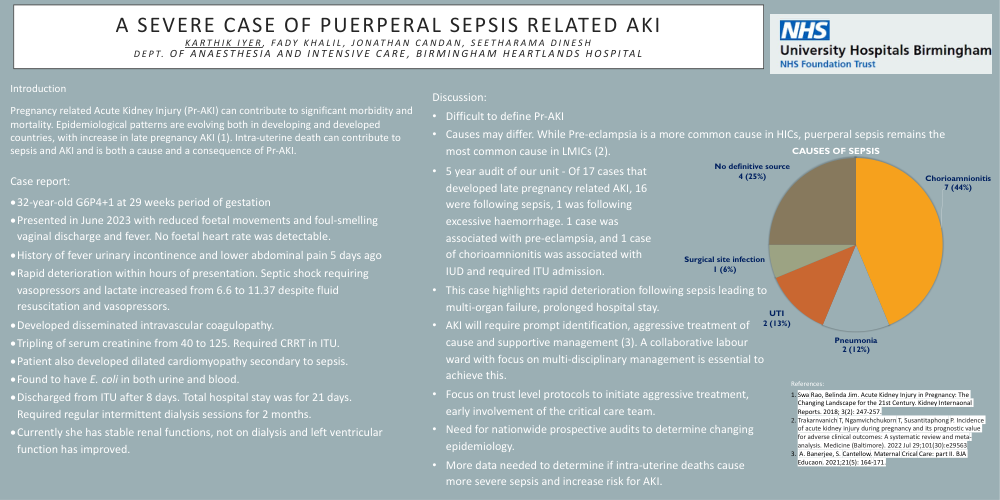
Of 17 cases that developed late pregnancy related AKI, 16 were following sepsis, 1 was following excessive haemorrhage. 1 case was associated with pre-eclampsia, and 1 case of chorioamnionitis was associated with IUD and required ITU admission.
This case highlights rapid deterioration following sepsis leading to multi-organ failure, prolonged hospital stay.
AKI will require prompt identification, aggressive treatment of cause and supportive management (3). A collaborative labour ward with focus on multi-disciplinary management is essential to achieve this.
Focus on trust level protocols to initiate aggressive treatment, early involvement of the critical care team.
Need for nationwide prospective audits to determine changing epidemiology.
More data needed to determine if intra-uterine death causes more severe sepsis and increases risk for AKI.
References:
- Swa Rao, Belinda Jim. Acute Kidney Injury in Pregnancy: The Changing Landscape for the 21st Century. Kidney Internaonal Reports. 2018; 3(2): 247-257.
- Trakarnvanich T, Ngamvichchukorn T, Susantitaphong P. Incidence of acute kidney injury during pregnancy and its prognostic value for adverse clinical outcomes: A systematic review and meta-analysis. Medicine (Baltimore). 2022 Jul 29;101(30):e29563
- A. Banerjee, S. Cantellow. Maternal Crical Care: part II. BJA Educaon. 2021;21(5): 164-171.