191 posters, 5 topics, 20 sessions, 393 authors, 116 institutions
ePostersLive by SciGen Technologies S.A. All rights reserved.
Obstetric Anaesthesia Annual Scientific Meeting 2023
18 - 19 May, 2023 | EICC Edinburgh

5794728
Septic shock secondary to invasive Group A Streptococcus following elective section: a case report.
Poster Presenter
Authors
Affiliations
Part of Topic
Case report
SEPTIC SHOCK SECONDARY TO INVASIVE GROUP A STREPTOCOCCUS FOLLOWING ELECTIVE SECTION: A CASE REPORT.
Introduction
Sepsis remains a leading direct cause of maternal death1. We report a case of septic shock secondary to invasive group A streptococcus (iGAS) following elective lower segment caesarean section (LSCS).
Case Report
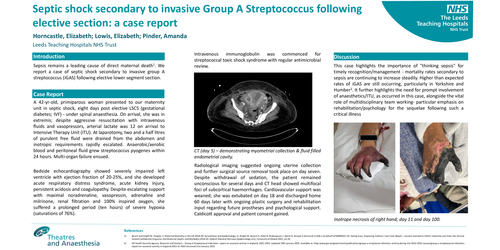
A 42-year-old, primiparous woman presented to our maternity unit in septic shock, eight days post elective LSCS (gestational diabetes; IVF) - under spinal anaesthesia. On arrival, she was in extremis; despite aggressive resuscitation with intravenous fluids and vasopressors, arterial lactate was 12 on arrival to Intensive Therapy Unit (ITU). At laparotomy, two and a half litres of purulent free fluid were drained from the abdomen and inotropic requirements rapidly escalated. Anaerobic/aerobic blood and peritoneal fluid cultures grew streptococcus pyogenes within 24 hours. Multi organ failure ensued. Bedside echocardiography demonstrated severely impaired left ventricle with ejection fraction of 20-25%, acute respiratory distress syndrome, acute kidney injury, persistent acidosis and coagulopathy. Despite escalating support with maximal noradrenaline, vasopressin, adrenaline & milrinone, renal filtration and 100% inspired oxygen, she suffered a prolonged period (ten hours) of severe hypoxia (saturations down to 76%). Intravenous immunoglobulin commenced for streptococcal toxic shock syndrome with regular antimicrobial review. Radiological imaging suggested ongoing uterine collection and further surgical source removal took place on day seven. Despite withdrawal of sedation the patient remained unconscious for several days and CT head showed multifocal foci of subcortical haemorrhages. Cardiovascular support was weaned; however inotrope necrosis of all digits/toes was already evident. She was successfully extubated on day 18 and discharged home 60 days later with ongoing plastic surgery and rehabilitation input regarding future prostheses and psychological support. Caldicott approval and patient consent gained.
Discussion
This case highlights the importance of ‘thinking sepsis’ for timely recognition/management - mortality rates secondary to sepsis are continuing to increase steadily1. Higher than expected rates of iGAS are still occurring, particularly in Yorkshire and Humber2. It further highlights the need for prompt involvement of anaesthetics/ITU, as occurred in this case, alongside the vital role of multidisciplinary team working - particular emphasis on rehabilitation/psychology for the sequelae following such a critical illness.