191 posters, 5 topics, 20 sessions, 393 authors, 116 institutions
ePostersLive by SciGen Technologies S.A. All rights reserved.
Obstetric Anaesthesia Annual Scientific Meeting 2023
18 - 19 May, 2023 | EICC Edinburgh

5809398
Case Report of patient with autoimmune angioedema and sacral nerve stimulator: anaesthetic considerations in the obstetric patient
Poster Presenter
Authors
Affiliations
Part of Topic
Case report
Autoimmune Angioedema and sacral nerve stimulator - a case report. Anaesthetic considerations in the obstetric patient
Introduction:
A collaborative MDT approach assessed risk:benefit of both SNS activation and mode of delivery. Risk to patient and foetus of angioedema and anaphylaxis was felt to be higher than the theoretical risks associated with neuromodulation in pregnancy and SNS activation continued until delivery. An elective LSCS was performed under a spinal anaesthetic with strict asepsis protocols followed. SNS was deactivated immediately prior to surgery and reactivated in recovery. Both the mum and baby had no adverse events.
Autoimmune Angioedema:
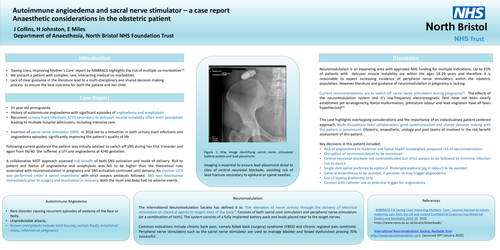
The International Neuromodulation Society has defined it as “the alteration of nerve activity through the delivery of electrical stimulation or chemical agents to targets sites of the body”. Consists of both spinal cord stimulators and peripheral nerve stimulators (or a combination of both). The system consists of a fully implanted battery pack and leads placed near to the target nerves.
Common indications include chronic back pain, namely failed back (surgery) syndrome (FBSS) and chronic regional pain syndrome. Peripheral nerve stimulators such as the sacral nerve stimulator are used to manage bladder and bowel dysfunction proving 70% successful.
Discussion:
Neuromodulation is an expanding area with approved NHS funding for multiple indications. Up to 25% of patients with detrusor muscle instability are within the ages 18-29 years and therefore it is reasonable to expect increasing incidence of peripheral nerve stimulators within the obstetric population. However literature and guidance of neuromodulation in pregnancy is lacking.
Current recommendations are to switch off sacral nerve stimulators during pregnancy(2). The effects of the neuromodulation system and it’s low-frequency electromagnetic field have not been clearly established yet teratogenicity, foetal malformation, premature labour and lead migration have all been hypothesised(2).
This case highlights overlapping considerations and the importance of an individualised patient centered approach. Multi-disciplinary team collaboration, good communication and shared decision making with the patient is paramount. Obstetric, anaesthetic, urology and pain teams all involved in the risk:benefit assessment of this patient.
Key decisions in this patient included:
2. International Neuromodulation Society. Available from http://www.neuromodulation.com [accessed 30th January 2023]