90 posters, 5 videos, 1 audios, 6 topics, 3 sessions, 245 authors, 1 institutions
ePostersLive by SciGen Technologies S.A. All rights reserved.
Net Zero Clinical Care 2023
10 October 2023 | BMA House, London

30471
Reducing carbon emissions and improving clinical outcomes through a review targeting SABA (short acting beta-agonist) inhaler overuse in a primary care setting
Poster Presenter
Authors
Part of Topic
Low Carbon Treatments
Reducing carbon emissions and improving clinical outcomes through a review targeting SABA (short acting beta-agonist) inhaler overuse in a primary care setting
WHY?
Irvinestown Health Centre is a GP practice located in a rural area in Northern Ireland with a practice population of about 7800
Prior to 2022 the practice had higher than local average prescribing rates of SABA inhalers
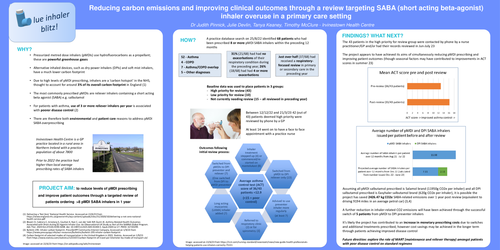
PROJECT AIM: to reduce levels of pMDI prescribing and improve patient outcomes through a targeted review of patients ordering pMDI SABA inhalers regularly
(>8 inhalers in 1 year)
HOW?
A practice database search on 25/8/22 identified 68 patients who had been prescribed 8 or more pMDI SABA inhalers within the preceding 12 months
52 - Asthma
4 - COPD
7 - Asthma/COPD overlap
5 – Other diagnoses
31% (21/68) had had no exacerbations of their respiratory condition during the preceding year, 26% (18/68) had had 4 or more exacerbations
Just over half (37/68) had received a respiratory-focused review in primary or secondary care in the preceding year
Baseline data was used to place patients in 3 groups:
Between 12/12/22 and 21/3/23 42 (out of 43) patients deemed high priority were reviewed by phone by a GP
At least 14 went on to have a face to face appointment with a practice nurse
FINDINGS? WHAT NEXT?
The 43 patients in the high priority for review group were contacted by phone by a nurse practitioner/GP and/or had their records reviewed in Jun-July 23
The project appears to have achieved its aims of simultaneously reducing pMDI prescribing and improving patient outcomes (though seasonal factors may have contributed to improvements in ACT scores in summer 23)
Assuming all pMDI salbutamol prescribed is salamol brand (11950 g CO2e per inhaler) and all DPI salbutamol prescribed is easyhaler salbutamol brand (620 g CO2e per inhaler), it is possible the project has saved 2426.47 kg CO2e SABA-related emissions over 1 year post review (equivalent to driving 9194 miles in an average petrol car) (3,4)
A further reduction in inhaler-related CO2 emissions will have been achieved through successful switch of 5 patients from pMDI to DPI preventer inhalers
It’s likely there has been an increase in monetary prescribing costs due to switches and additional treatments, however cost savings may be achieved in the longer term through patients achieving improved disease control
Future direction: explore the role of MART (maintenance and reliever therapy) amongst patients with poor disease control on standard regimens