90 posters, 5 videos, 1 audios, 6 topics, 3 sessions, 245 authors, 1 institutions
ePostersLive by SciGen Technologies S.A. All rights reserved.
Net Zero Clinical Care 2023
10 October 2023 | BMA House, London

30536
Reducing the Carbon Footprint in NHS Surgical Procedures: A Study of Day-Case vs. In-Patient Laparoscopic Cholecystectomies
Poster Presenter
Part of Topic
Low Carbon Care Settings
Background:
The National Health
Service (NHS) in England has set a
target to be net zero for carbon
emissions by 2040. Increasing
use of day case surgery pathways
may help to meet this target by
reducing the per patient carbon
footprint of surgery.
Methods:
Data were extracted from
the Hospital Episode Statistics
database for all day case
laparoscopic cholecystectomy
procedures conducted in England
from 1st January 2022 to 31st
December 2022. Surgery
conducted as day case and as in
patient procedures were identified
and the estimated carbon footprint
for these elements of the surgical
pathway calculated based on data
from Greener NHS and the
Sustainable Healthcare Coalition.
Data were aggregated to
Integrated Care Board (ICB) level
for analysis
Results:
We identified 48,393 laparoscopic
cholecystectomy procedures in 2022 of which
32,231 (66.6%) were done as day case
surgery. Day case rates varied across the 42
ICBs in England with the upper quartile with
the best performing trusts had a minimum
day case rate of 71.8%. Using figures
calculated by the Sustainable Healthcare
Coalition (SHC) for average carbon footprint
of surgery per patient, we estimate that if all
the ICBs in England had performed at least
this well, we could have saved up to
189,437.5 KgCO 2 e (equivalent to powering
at least 172 homes for the year 2022).
Conclusions:
Our study highlights potential
NHS carbon savings through efficient use of
day case surgical pathways. Reducing
variation in care of laparoscopic
cholecystectomies across the NHS and
encouraging all hospitals to adopt day case
surgeries, where clinically appropriate, would
lead to further carbon savings. Such changes
are also likely to reduce costs and increase
patient throughput, thus leading to more
efficient and productive healthcare
Authors: Faraz M. Ayyaz
, James Joyner, Siyab Anwar, Mohammed Arifuzaman, William K. Gray, Prof. Tim Briggs
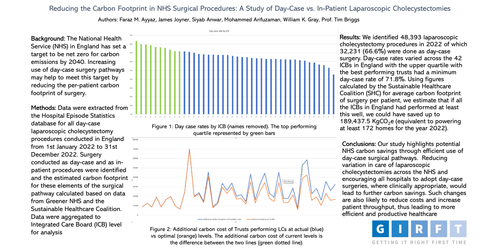
Figure 1: Day case rates by ICB (names removed). The top performing
quartile represented by green bars
Figure 2: Additional carbon cost of Trusts performing LCs at actual (blue)
vs optimal (orange) levels. The additional carbon cost of current levels is
the