586 posters, 8 topics, 23 sessions, 1,077 authors, 622 institutions
ePostersLive by SciGen Technologies S.A. All rights reserved.
ISQua's 40th International Conference 2024
24th - 27th September 2024 | Istanbul, Türkiye

P577
Evaluating measures to improve the effectiveness of nighttime environmental cleaning in a nursing unit
Poster Presenter
Part of Topic
Workforce, Policy, and Governance
Evaluating measures to improve the effectiveness of nighttime environmental cleaning in a nursing unit
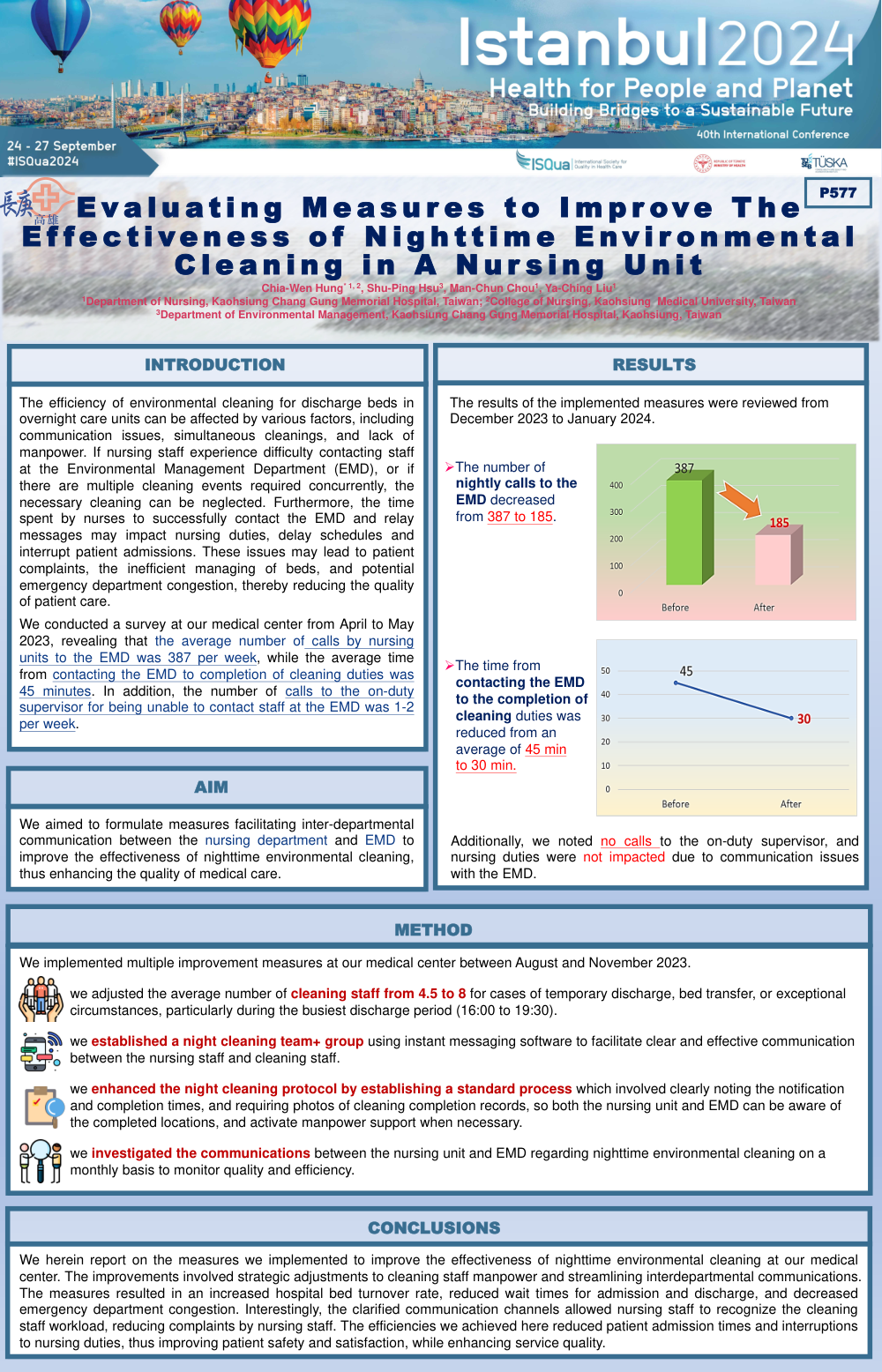
Introduction: The efficiency of environmental cleaning for discharge beds in overnight care units can be affected by various factors, including communication issues, simultaneous cleanings, and lack of manpower. If nursing staff experience difficulty contacting staff at the Environmental Management Department (EMD), or if there are multiple cleaning events required concurrently, the necessary cleaning can be neglected. Furthermore, the time spent by nurses to successfully contact the EMD and relay messages may impact nursing duties, delay schedules and interrupt patient admissions. These issues may lead to patient complaints, the inefficient managing of beds, and potential emergency department congestion, thereby reducing the quality of patient care. We conducted a survey at our medical center from April to May 2023, revealing that the average number of calls by nursing units to the EMD was 387 per week, while the average time from contacting the EMD to completion of cleaning duties was 45 minutes. In addition, the number of calls to the on-duty supervisor for being unable to contact staff at the EMD was 1-2 per week.
Aim:In light of these issues, we aimed to formulate measures facilitating interdepartmental communication between the nursing department and EMD to improve the effectiveness of nighttime environmental cleaning, thus enhancing the quality of medical care.
Methods: We implemented multiple improvement measures at our medical center between August and November 2023. First, we adjusted the average number of cleaning staff from 4.5 to 8 for cases of temporary discharge, bed transfer, or exceptional circumstances, particularly during the busiest discharge period (16:00 to 19:30). Second, we established a night cleaning team+ group using instant messaging software to facilitate clear and effective communication between the nursing staff and cleaning staff. Third, we enhanced the night cleaning protocol by establishing a standard process which involved clearly noting the notification and completion times, and requiring photos of cleaning completion records, so both the nursing unit and EMD can be aware of the completed locations, and activate manpower support when necessary. Finally, we investigated the communications between the nursing unit and EMD regarding nighttime environmental cleaning on a monthly basis to monitor quality and efficiency.
Results: The results of the implemented measures were reviewed from December 2023 to January 2024. The data revealed that the number of nightly calls to the EMD decreased from 387 to 185, while the time from contacting the EMD to the completion of cleaning duties was reduced from an average of 45 minutes to 30 minutes. Additionally, we noted no calls to the on-duty supervisor, and nursing duties were not impacted due to communication issues with the EMD.
Conclusion: We herein report on the measures we implemented to improve the effectiveness of nighttime environmental cleaning at our medical center. The improvements involved strategic adjustments to cleaning staff manpower and streamlining interdepartmental communications. The measures resulted in an increased hospital bed turnover rate, reduced wait times for admission and discharge, and decreased emergency department congestion. Interestingly, the clarified communication channels allowed nursing staff to recognize the cleaning staff workload, reducing complaints by nursing staff. The efficiencies we achieved here reduced patient admission times and interruptions to nursing duties, thus improving patient safety and satisfaction, while enhancing service quality.