586 posters, 8 topics, 23 sessions, 1,077 authors, 622 institutions
ePostersLive by SciGen Technologies S.A. All rights reserved.
ISQua's 40th International Conference 2024
24th - 27th September 2024 | Istanbul, Türkiye

P590
During the COVID-19 pandemic, positive leadership has been instrumental in improving the retention rate and job satisfaction of nursing staff.
Poster Presenter
Authors
Affiliations
Part of Topic
Workforce, Policy, and Governance
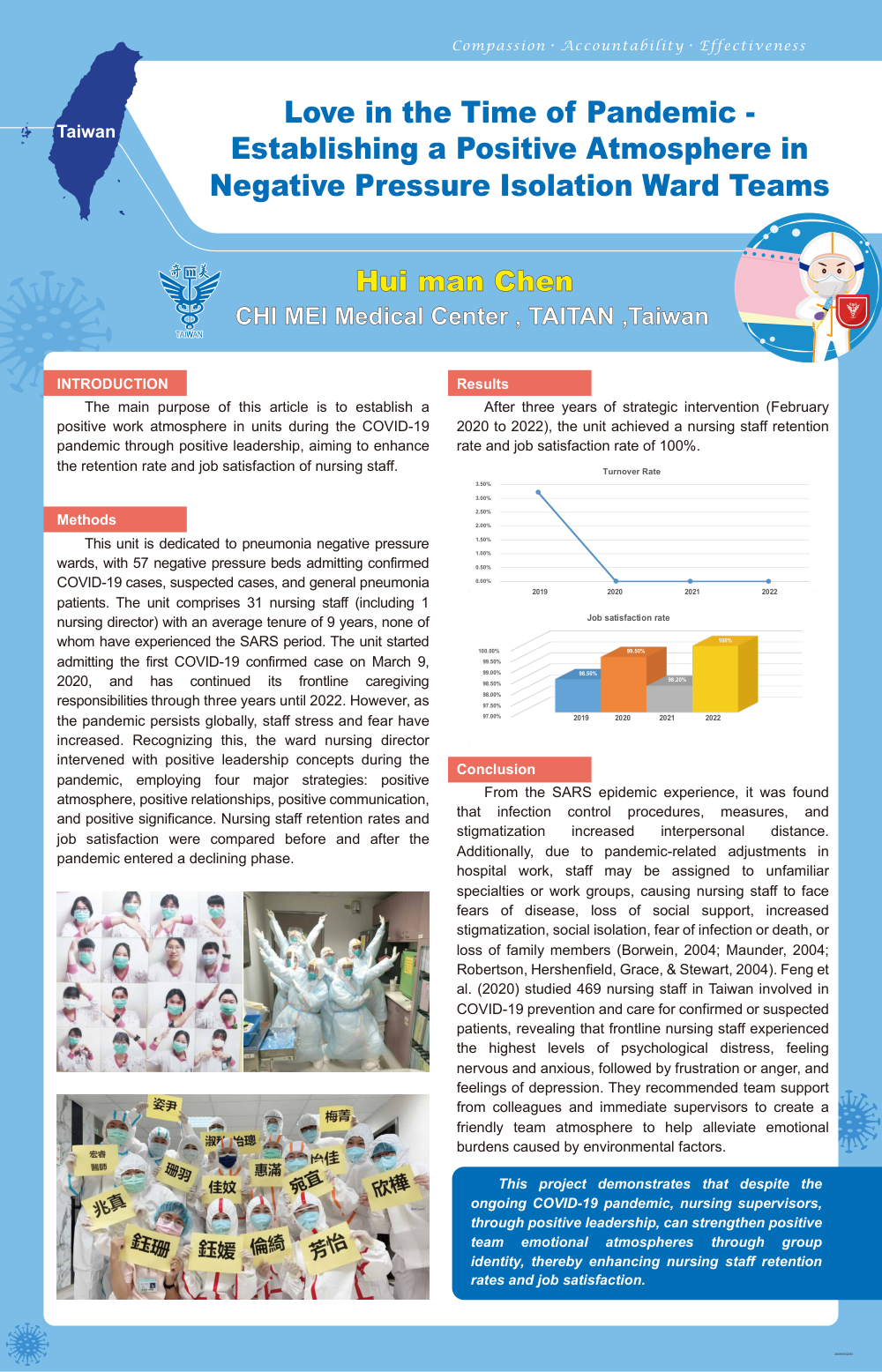
Love in the Time of Pandemic - Establishing a Positive Atmosphere in Negative Pressure Isolation Ward Teams
Hui man Chen
CHI MEI Medical Center , TAITAN ,Taiwan
INTRODUCTION
The main purpose of this article is to establish a positive work atmosphere in units during the COVID-19 pandemic through positive leadership, aiming to enhance the retention rate and job satisfaction of nursing staff.
Methods
This unit is dedicated to pneumonia negative pressure wards, with 57 negative pressure beds admitting confirmed COVID-19 cases, suspected cases, and general pneumonia patients. The unit comprises 31 nursing staff (including 1 nursing director) with an average tenure of 9 years, none of whom have experienced the SARS period. The unit started admitting the first COVID-19 confirmed case on March 9, 2020, and has continued its frontline caregiving responsibilities through three years until 2022. However, as the pandemic persists globally, staff stress and fear have increased. Recognizing this, the ward nursing director intervened with positive leadership concepts during the pandemic, employing four major strategies: positive atmosphere, positive relationships, positive communication, and positive significance. Nursing staff retention rates and job satisfaction were compared before and after the pandemic entered a declining phase.
After three years of strategic intervention (February 2020 to 2022), the unit achieved a nursing staff retention rate and job satisfaction rate of 100%.
Conclusion
From the SARS epidemic experience, it was found that infection control procedures, measures, and stigmatization increased interpersonal distance. Additionally, due to pandemic-related adjustments in hospital work, staff may be assigned to unfamiliar specialties or work groups, causing nursing staff to face fears of disease, loss of social support, increased stigmatization, social isolation, fear of infection or death, or loss of family members (Borwein, 2004; Maunder, 2004; Robertson, Hershenfield, Grace, & Stewart, 2004). Feng et al. (2020) studied 469 nursing staff in Taiwan involved in COVID-19 prevention and care for confirmed or suspected patients, revealing that frontline nursing staff experienced the highest levels of psychological distress, feeling nervous and anxious, followed by frustration or anger, and feelings of depression. They recommended team support from colleagues and immediate supervisors to create a friendly team atmosphere to help alleviate emotional burdens caused by environmental factors.
This project demonstrates that despite the ongoing COVID-19 pandemic, nursing supervisors, through positive leadership, can strengthen positive team emotional atmospheres through group identity, thereby enhancing nursing staff retention rates and job satisfaction.