586 posters, 8 topics, 23 sessions, 1,077 authors, 622 institutions
ePostersLive by SciGen Technologies S.A. All rights reserved.
ISQua's 40th International Conference 2024
24th - 27th September 2024 | Istanbul, Türkiye

P579
Application of a Quality Control Circle Method in Reducing the Nursing Staff Turnover Rate
Poster Presenter
Part of Topic
Workforce, Policy, and Governance
Application of a Quality Control Circle Method in Reducing the Nursing Staff Turnover Rate
Introduction: Nurse turnover, which occurs when nurses leave their jobs or the profession, is a major concern for the healthcare industry (Winter et al., 2020). Nursing staff turnover has long been considered an important indicator of nursing quality. Low retention rates and shortages of qualified nurses can affect many aspects of health care (Tang & Hudson, 2019).
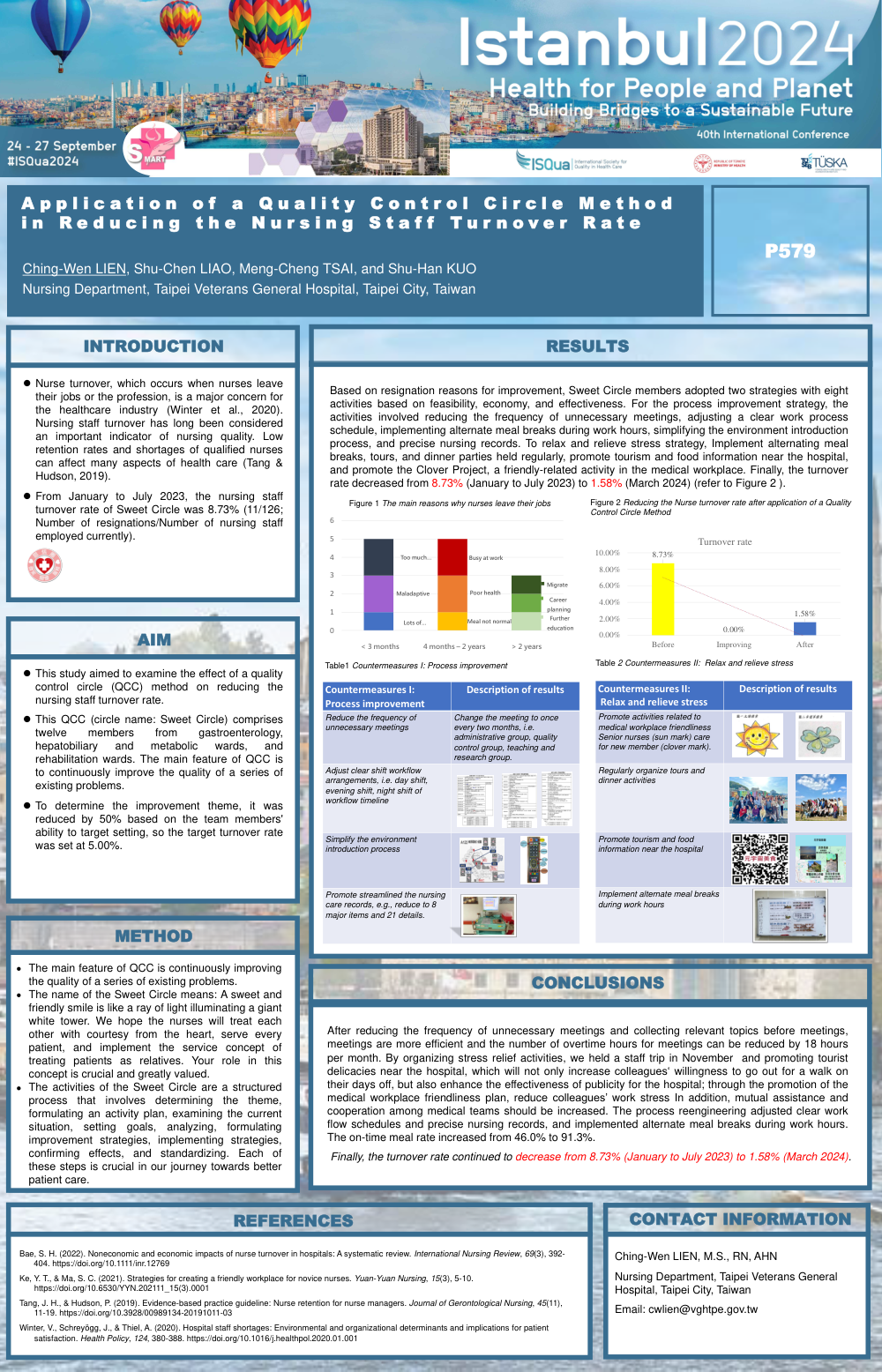
From January to July 2023, the nursing staff turnover rate of Sweet Circle was 8.73% (11/126; Number of resignations/Number of nursing staff employed currently).
Aim: This study aimed to examine the effect of a quality control circle (QCC) method on reducing the nursing staff turnover rate.
This QCC (circle name: Sweet Circle) comprises twelve members from gastroenterology, hepatobiliary and metabolic wards, and rehabilitation wards. The main feature of QCC is to continuously improve the quality of a series of existing problems. To determine the improvement theme, it was reduced by 50% based on the team members' ability to target setting, so the target turnover rate was set at 5.00%.
Method: The main feature of QCC is continuously improving the quality of a series of existing problems.
The name of the Sweet Circle means: A sweet and friendly smile is like a ray of light illuminating a giant white tower. We hope the nurses will treat each other with courtesy from the heart, serve every patient, and implement the service concept of treating patients as relatives. Your role in this concept is crucial and greatly valued.
The activities of the Sweet Circle are a structured process that involves determining the theme, formulating an activity plan, examining the current situation, setting goals, analyzing, formulating improvement strategies, implementing strategies, confirming effects, and standardizing. Each of these steps is crucial in our journey towards better patient care.
Results: Based on resignation reasons for improvement, Sweet Circle members adopted two strategies with eight activities based on feasibility, economy, and effectiveness. For the process improvement strategy, the activities involved reducing the frequency of unnecessary meetings, adjusting a clear work process schedule, implementing alternate meal breaks during work hours, simplifying the environment introduction process, and precise nursing records. To relax and relieve stress strategy, Implement alternating meal breaks, tours, and dinner parties held regularly, promote tourism and food information near the hospital, and promote the Clover Project, a friendly-related activity in the medical workplace. Finally, the turnover rate decreased from 8.73% (January to July 2023) to 1.58% (March 2024).
Conclusions: After reducing the frequency of unnecessary meetings and collecting relevant topics before meetings, meetings are more efficient and the number of overtime hours for meetings can be reduced by 18 hours per month. By organizing stress relief activities, we held a staff trip in November and promoting tourist delicacies near the hospital, which will not only increase colleagues‘ willingness to go out for a walk on their days off, but also enhance the effectiveness of publicity for the hospital; through the promotion of the medical workplace friendliness plan, reduce colleagues’ work stress In addition, mutual assistance and cooperation among medical teams should be increased. The process reengineering adjusted clear work flow schedules and precise nursing records, and implemented alternate meal breaks during work hours. The on-time meal rate increased from 46.0% to 91.3%. Finally, the turnover rate continued to decrease from 8.73% (January to July 2023) to 1.58% (March 2024).