301 posters, 50 videos, 13 topics, 13 sessions, 739 authors, 192 institutions
ePostersLive by SciGen Technologies S.A. All rights reserved.
ISMICS 2026 Annual Meeting
10 - 13 June, 2026 | Miami, Florida

P98
Ultra-Fast-Track Minimally Invasive Congenital Heart Surgery
Poster Presenter
Part of Topic
Pediatric - Cardiac, Cardiovascular & Thoracic
Background / Objective
•Rising popularity of minimally invasive surgical techniques (MIS) for congenital low-risk lesions1,2
•Institutional experience with an ultra-fast-track pathway (UFTP) for pediatric congenital patients undergoing MIS
•Focus on early outcomes, reduction of length of stay and of healthcare-associated costs
Methods
•Retrospective, single-center study (April 2018 – April 2026)
•Inclusion criteria: All patients (age <18 yrs) with ASD or SVD/PAPVD undergoing MIS via a right vertical mini-thoracotomy1,2
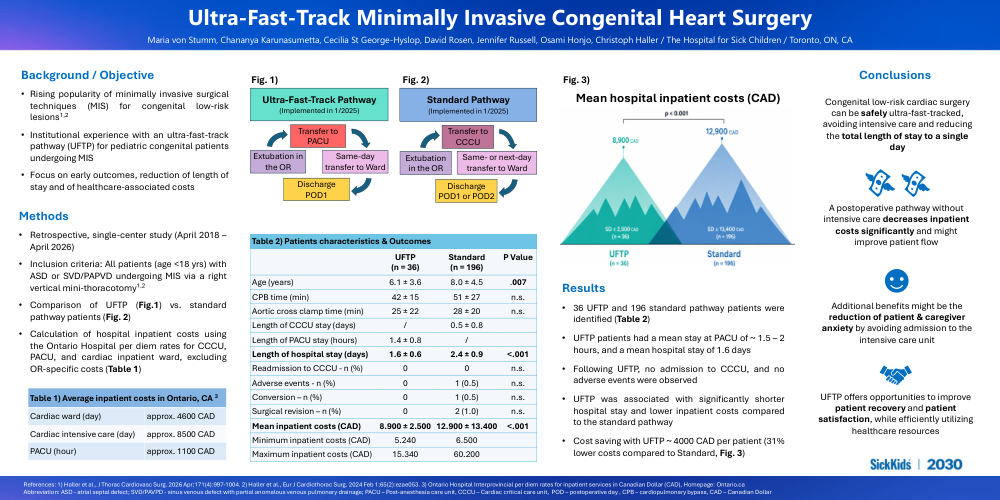
•Comparison of UFTP (Fig.1) vs. standard pathway patients (Fig. 2)
•Calculation of hospital inpatient costs using the Ontario Hospital per diem rates for CCCU, PACU, and cardiac inpatient ward, excluding OR-specific costs (Table 1)
Results
•36 UFTP and 196 standard pathway patients were identified (Table 2)
•UFTP patients had a mean stay at PACU of ~ 1.5 – 2 hours, and a mean hospital stay of 1.6 days
•Following UFTP, no admission to CCCU, and no adverse events were observed
•UFTP was associated with significantly shorter hospital stay and lower inpatient costs compared to the standard pathway
•Cost saving with UFTP ~ 4000 CAD per patient (31% lower costs compared to Standard, Fig. 3)
Conclusions
•Congenital low-risk cardiac surgery can be safely ultra-fast-tracked, avoiding intensive care and reducing total length of stay to a single day
•A pathway without intensive care decreases inpatient hospitalization costs and might improve patient flow
•Additional benefits might be the reduction of patient & caregiver anxiety by avoiding admission to the intensive care unit
•This modern pathway offers opportunities to improve patient recovery and patient satisfaction, while efficiently utilizing healthcare resources and increasing accessibility to care.