301 posters, 50 videos, 13 topics, 13 sessions, 739 authors, 192 institutions
ePostersLive by SciGen Technologies S.A. All rights reserved.
ISMICS 2026 Annual Meeting
10 - 13 June, 2026 | Miami, Florida

P41
Sex-based Differences In Outcomes After Robotic Minimally Invasive Direct Coronary Artery Bypass: A Single-center Retrospective Review
Poster Presenter
Part of Topic
Coronary Revascularization
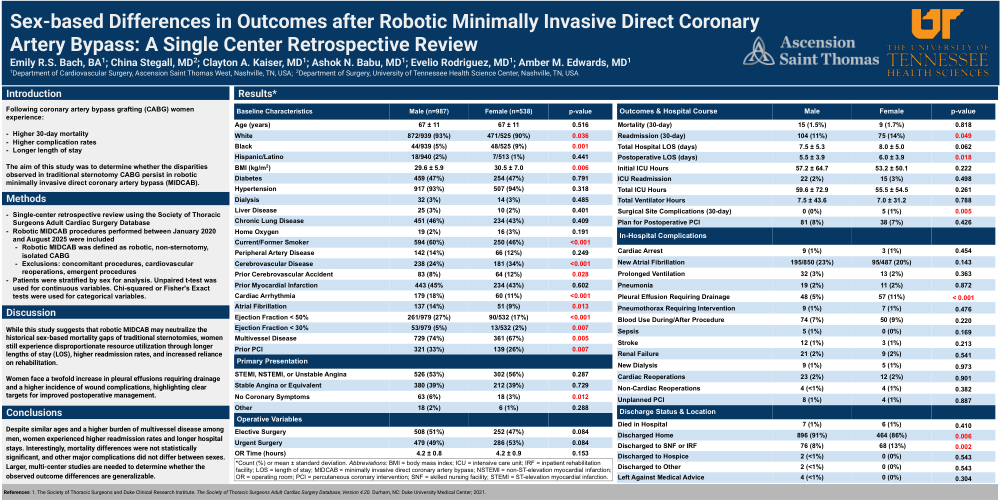
Background: Women have historically experienced worse outcomes following coronary artery bypass grafting (CABG), including higher 30-day mortality, higher complication rates, and longer length of stay (LOS). This study’s objective is to determine whether the disparities observed in traditional sternotomy CABG persist in robotic minimally invasive direct coronary artery bypass (MIDCAB).
Methods: A single-center retrospective review of the STS Adult Cardiac Surgery Database was conducted to identify robotic MIDCAB cases between January 2020 and August 2025. Robotic MIDCAB was defined as a non-sternotomy isolated CABG performed with robotic assistance. Concomitant procedures were excluded, as were cardiovascular reoperations and emergent procedures. The final cohort was stratified by sex.
Results: There were 1,525 patients who underwent isolated MIDCAB (987 men, 538 women), with a mean age of 67 for both groups (p = 0.516). Mortality rates were similar between men and women (1.5% vs 1.7%; p = 0.818). Women had higher readmission rates (14% vs 11%; p = 0.049) and longer postoperative LOS (6.0 vs 5.5 days; p = 0.018). Women had higher rates of wound complications (1% vs 0%; p = 0.005) and higher rates of pleural effusion requiring drainage (11% vs 5%; p < 0.001). Women were also more likely to be discharged to a rehabilitation or skilled nursing facility (13% vs 8%; p = 0.002). Rates of stroke (1%), renal failure (2%), cardiac reoperations (2%), and other postoperative morbidity did not differ by sex.
Conclusions: Despite similar ages and a higher burden of multivessel disease among men, women experienced higher readmission rates and longer hospital stays. Interestingly, mortality differences were not statistically significant, and other major complications did not differ between sexes. Larger, multi-center studies are needed to determine whether the observed outcome differences are generalizable.
Keywords: robotic-assisted MIDCAB; robotic revascularization; gender disparities; minimally invasive cardiac surgery