301 posters, 50 videos, 13 topics, 13 sessions, 734 authors, 193 institutions
ePostersLive by SciGen Technologies S.A. All rights reserved.
ISMICS 2026 Annual Meeting
10 - 13 June, 2026 | Miami, Florida

D125
Robotic-assisted Thoracoscopic Resection Of Thoracic Endometriosis For Catamenial Pneumothorax
Poster Presenter
Authors
Affiliations
null,
Part of Topic
Thoracic Surgery � Miscellaneous
Catamenial pneumothorax is a rare entity, comprising only 3-6% of all spontaneous pneumothorax (SP) cases in menstruating females. Patients typically present with SP within a 72-hour period prior to, or immediately after, the onset of menses. Proposed mechanisms include migration of endometrial cells eroding transdiaphragmatically into the pleural space; hematogenous or lymphatic spread of endometrial cells into the pleural surfaces; increased prostaglandin levels resulting in bronchial arterial vasoconstriction, and intrauterine and intraperitoneal air migration through diaphragmatic fenestrations. We describe a robotic-assisted thoracoscopic technique for repair of this unusual condition.
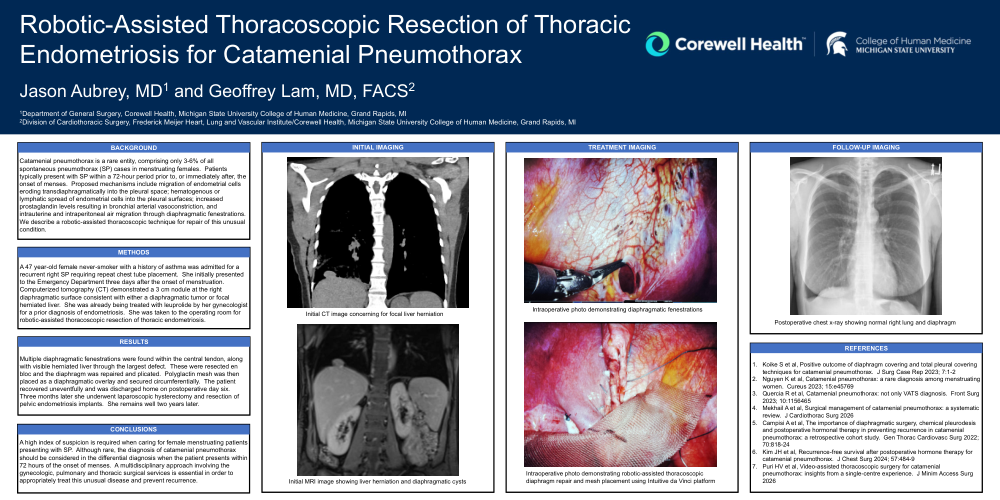
A 47 year-old female never-smoker with a history of asthma was admitted for a recurrent right SP requiring repeat chest tube placement. She initially presented to the Emergency Department three days after the onset of menstruation. Computerized tomography (CT) demonstrated a 3 cm nodule at the right diaphragmatic surface consistent with either a diaphragmatic tumor or focal herniated liver. She was already being treated with leuprolide by her gynecologist for a prior diagnosis of endometriosis. She was taken to the operating room for robotic-assisted thoracoscopic resection of thoracic endometriosis.
Multiple diaphragmatic fenestrations were found within the central tendon, along with visible herniated liver through the largest defect. These were resected en bloc and the diaphragm was repaired and plicated. Polyglactin mesh was then placed as a diaphragmatic overlay and secured circumferentially. The patient recovered uneventfully and was discharged home on postoperative day six. Three months later she underwent laparoscopic hysterectomy and resection of pelvic endometriosis implants. She remains well two years later.
A high index of suspicion is required when caring for female menstruating patients presenting with SP. Although rare, the diagnosis of catamenial pneumothorax should be considered in the differential diagnosis when the patient presents within 72 hours of the onset of menses. A multidisciplinary approach involving the gynecologic, pulmonary and thoracic surgical services is essential in order to appropriately treat this unusual disease and prevent recurrence.