477 posters, 14 topics, 2,065 authors, 1,055 institutions
ePostersLive by SciGen Technologies S.A. All rights reserved.
The Joint EBJIS-MSIS 2026 Conference
17 - 19 September, 2026 | Porto, Portugal

EP053
Limb Salvage in Multidrug-Resistant Infected Distal Tibial Nonunion: Staged Debridement and Ilizarov Bone Transport
Poster Presenter
Part of Topic
Case Report
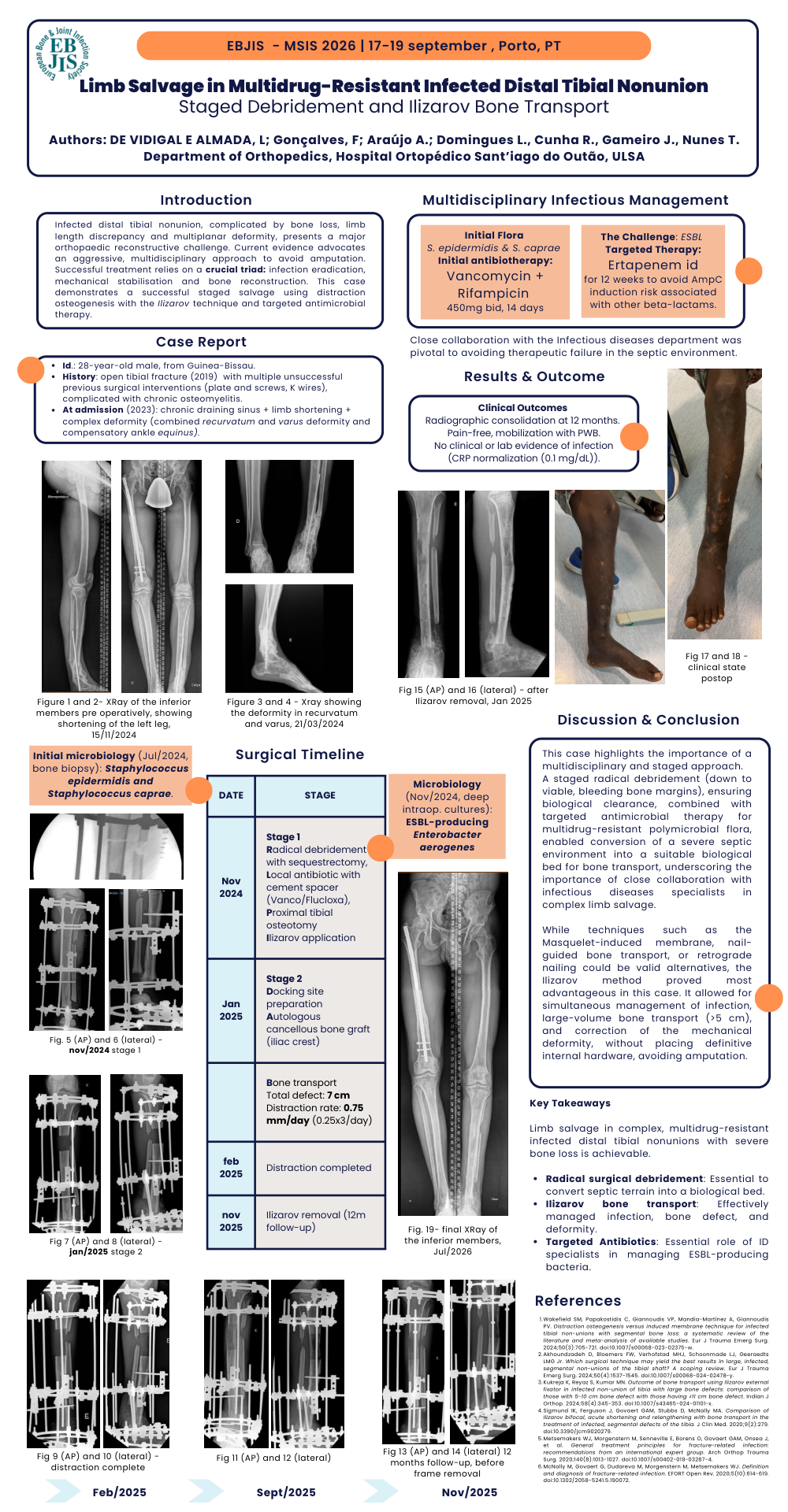
INTRODUCTION: Infected distal tibial nonunion, complicated by bone loss, limb length discrepancy and multiplanar deformity, presents a major orthopaedic reconstructive challenge. Current evidence advocates an aggressive, multidisciplinary approach to avoid amputation. Successful treatment relies on a crucial triad: infection eradication, mechanical stabilisation and bone reconstruction. This case demonstrates a successful staged salvage using distraction osteogenesis with the Ilizarov technique and targeted antimicrobial therapy.
CASE REPORT:
- Id.: 28-year-old male, from Guinea-Bissau.
- History: open tibial fracture (2019)with multiple unsuccessful previous surgical interventions (plate and screws, K wires), complicated with chronic osteomyelitis.
- At admission (2023): chronic draining sinus + limb shortening +complex deformity (combined recurvatum and varus deformity and compensatory ankle equinus).
|
Stage 1 Radical debridement with sequestrectomy, Local antibiotic with cement spacer (Vanco/Flucloxa), Proximal tibial osteotomy Ilizarov application |
|
Stage 2 Docking site preparation Autologous cancellous bone graft (iliac crest) |
|
Bone transport Total defect: 7 cm Distraction rate: 0.75 mm/day (0.25x3/day) |
|
Distraction completed |
|
Ilizarov removal (12m follow-up) |
Initial Flora S. epidermidis & S. caprae Initial antibiotherapy: Vancomycin + Rifampicin 450mg bid, 14 days
The Challenge: ESBL Targeted Therapy: Ertapenem id for 12 weeks to avoid AmpC induction risk associated with other beta-lactams.
Discussion & Conclusion: This case highlights the importance of a multidisciplinary and staged approach.
A staged radical debridement (down to viable, bleeding bone margins), ensuring biological clearance, combined with targeted antimicrobial therapy for multidrug-resistant polymicrobial flora, enabled conversion of a severe septic environment into a suitable biological bed for bone transport, underscoring the importance of close collaboration with infectious diseases specialists in complex limb salvage.
While techniques such as the Masquelet-induced membrane, nail-guided bone transport, or retrograde nailing could be valid alternatives, the Ilizarov method proved most advantageous in this case. It allowed for simultaneous management of infection, large-volume bone transport (>5 cm), and correction of the mechanical deformity, without placing definitive internal hardware, avoiding amputation.
Key Takeaways: Limb salvage in complex, multidrug-resistant infected distal tibial nonunions with severe bone loss is achievable.
- Radical surgical debridement: Essential to convert septic terrain into a biological bed.
- Ilizarov bone transport: Effectively managed infection, bone defect, and deformity.
- Targeted Antibiotics: Essential role of ID specialists in managing ESBL-producing bacteria.