477 posters, 14 topics, 2,065 authors, 1,055 institutions
ePostersLive by SciGen Technologies S.A. All rights reserved.
The Joint EBJIS-MSIS 2026 Conference
17 - 19 September, 2026 | Porto, Portugal

EP032
From Gut to Spine: A Rare Presentation of Salmonella enterica Vertebral Infection
Poster Presenter
Part of Topic
Case Report
From Gut to Spine: A Rare Presentation of Salmonella enterica Vertebral Infection
Aim:
Pyogenic spondylodiscitis is an uncommon but potentially severe infection of the intervertebral disc and adjacent vertebral bodies. The most frequently implicated pathogen is Staphylococcus aureus, whereas infection due to Salmonella enterica is rare and typically associated with hemoglobinopathies, immunosuppression, or prior gastrointestinal infection. We report a case of thoracic spondylodiscitis caused by S. enterica in an otherwise immunocompetent young adult, highlighting diagnostic challenges and therapeutic management.
Methods:
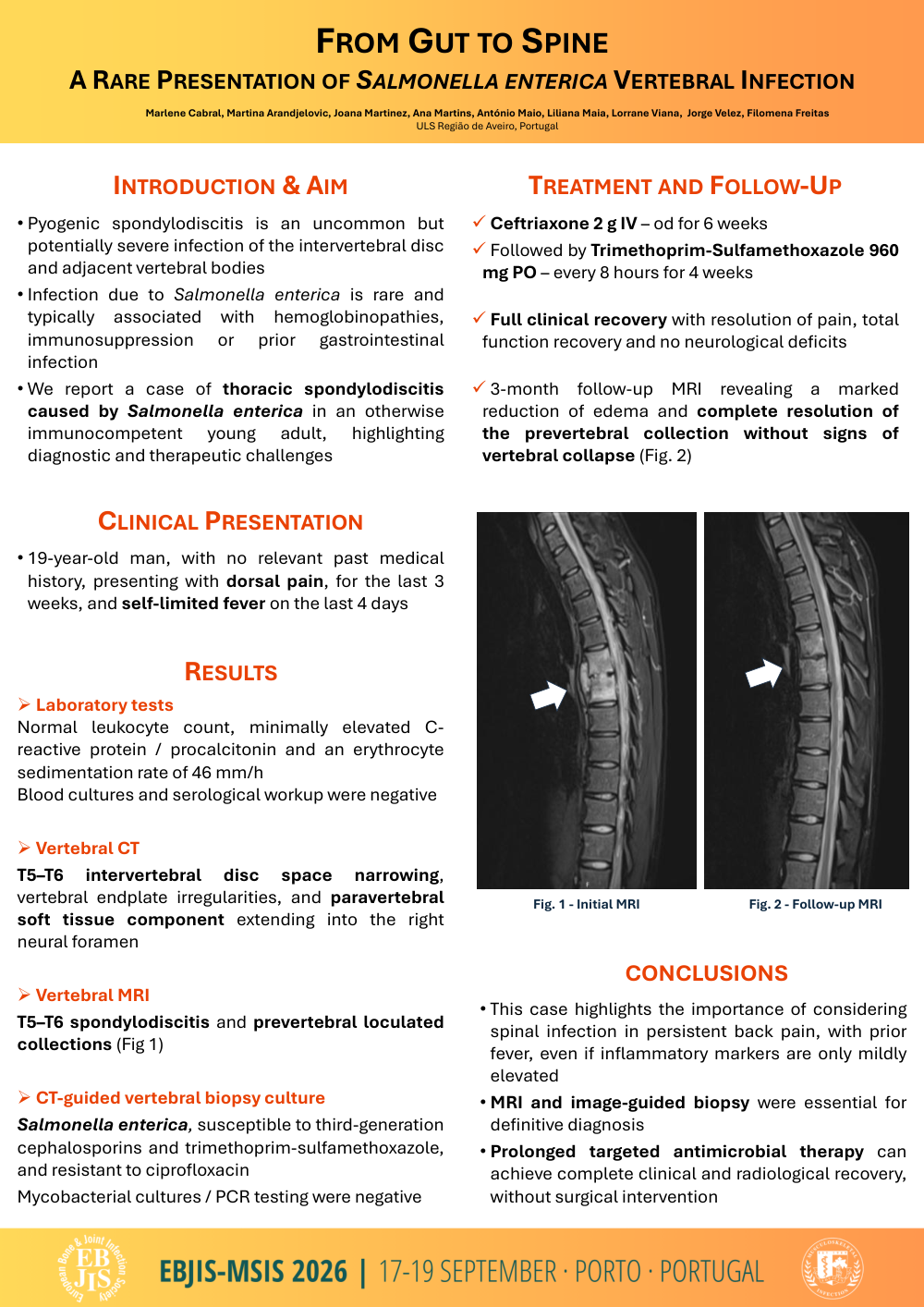
We report the case of a 19-year-old man, with no relevant past medical history or chronic medication, with a history of dorsal back pain for 3 weeks, initially accompanied by 4 days of self-limited fever. A chest x-ray was performed, suggesting community-acquired pneumonia, and empirical oral antibiotics were prescribed. Due to persistent dorsal pain, a vertebral computed tomography was undertaken and revealed D5–D6 intervertebral disc space narrowing, vertebral endplate irregularities, and a paravertebral soft tissue component extending into the right neural foramen. The patient was then admitted and magnetic resonance imaging confirmed affectation of D5–D6 suggesting spondylodiscitis, with intense post-gadolinium enhancement and prevertebral loculated collections (without epidural abscesses or spinal cord compression) (Fig1). Laboratory tests showed normal leukocyte count, minimally elevated C-reactive protein / procalcitonin and an erythrocyte sedimentation rate of 46 mm/h. Multiple blood cultures, drawn prior to any antibiotic use, were negative. Serologic testing for human immunodeficiency virus, viral hepatitis, syphilis, and brucellosis was negative. A CT-guided vertebral biopsy was performed for microbiological diagnosis.
Results:
Culture of the biopsy specimen yielded Salmonella enterica, susceptible to third-generation cephalosporins and trimethoprim-sulfamethoxazole, and resistant to ciprofloxacin. Mycobacterial cultures and molecular testing were negative. The patient received intravenous ceftriaxone (2 g once daily) for six weeks, followed by oral trimethoprim-sulfamethoxazole (960 mg every 8 hours) for four weeks. Clinical evolution was favourable, with complete resolution of pain and no neurological deficits. Follow-up MRI at three months demonstrated marked reduction of vertebral edema and complete resolution of the prevertebral collection, without vertebral collapse (Fig2).
Conclusions:
Spondylodiscitis due to Salmonella enterica is rare in immunocompetent individuals and may occur without preceding gastrointestinal symptoms or bacteremia. This case highlights the importance of considering spinal infection in persistent back pain, with prior fever, even when inflammatory markers are only slightly elevated. MRI and image-guided biopsy were essential for definitive diagnosis. Prolonged targeted antimicrobial therapy achieved complete clinical and radiological recovery, avoiding surgical intervention. Early etiological diagnosis is crucial to optimize outcomes and prevent neurological complications.