477 posters, 14 topics, 2,065 authors, 1,055 institutions
ePostersLive by SciGen Technologies S.A. All rights reserved.
The Joint EBJIS-MSIS 2026 Conference
17 - 19 September, 2026 | Porto, Portugal

EP236
Modifiable factors associated with treatment failure in implant-associated osteoarticular infections: a single-centre multidisciplinary study
Poster Presenter
Part of Topic
Prognosis
Introduction:
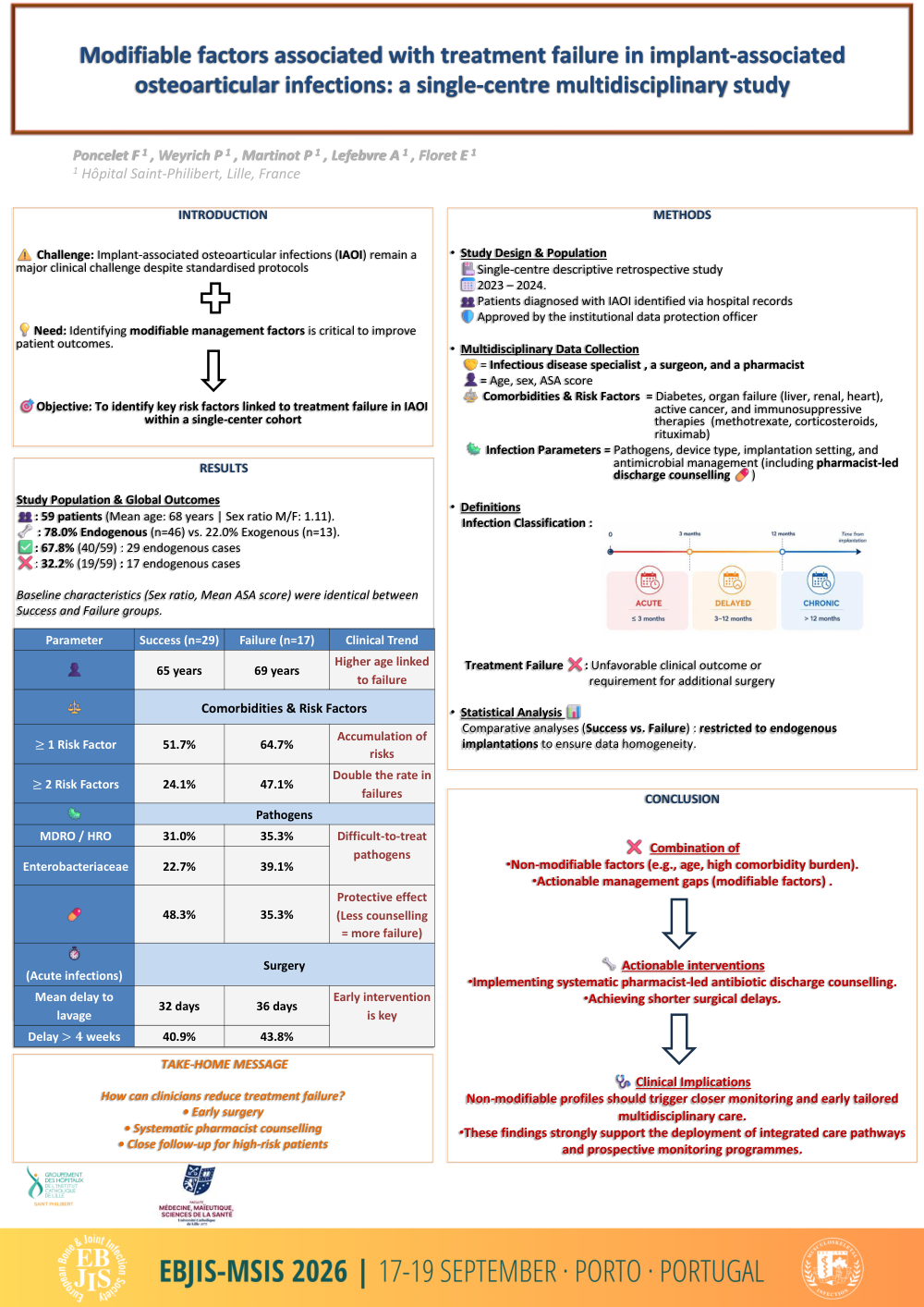
Implant-associated osteoarticular infections (IAOI) remain a significant challenge despite standardised protocols. Identifying modifiable management factors is essential to improve clinical outcomes. This study aimed to identify factors linked to treatment failure in IAOI within a single centre.
Methods:
This retrospective descriptive study included patients diagnosed with IAOI between 2023 and 2024, identified through hospital records. Data were defined and collected by a multidisciplinary team (infectious disease specialist, surgeon, and pharmacist).
Collected data included demographics and clinical characteristics (age, sex, ASA score), comorbidities (diabetes, liver, renal, or heart failure, active cancer), iatrogenic risk factors (methotrexate, immunosuppressants, corticosteroids, rituximab), infection-related parameters (type of infection, device, implantation setting, pathogens), and antimicrobial management, including pharmacist-led antibiotic discharge counselling.
Infections were classified as acute (≤3 months), delayed (3–12 months), or chronic (>12 months). Implantations were considered endogenous when performed within the centre and exogenous otherwise. Treatment failure was defined as an unfavourable outcome or the need for additional surgery. Comparative analyses between success and failure were restricted to endogenous implantations. Ethical approval was obtained from the institutional data protection officer.
Results:
Fifty-nine patients were included (mean age 68 years; sex ratio 1.11), of whom 46 (78.0%) underwent endogenous implantation. The overall success rate was 67.8% (40/59), including 29 endogenous cases, while failure occurred in 32.2% (19/59), including 17 endogenous cases (9 osteosynthesis hardware, 8 joint prostheses).
Sex ratio and mean ASA score were similar between the success and failure groups (1.42 vs 1.43 and 2.62 vs 2.65).
In the endogenous group, failure appeared to be associated with a higher mean age (69 vs 65 years) and more patients with ≥1 risk factor (comorbidities or iatrogenic treatments: 64.7% vs 51.7%; ≥2: 47.1% vs 24.1%). Microbiologically, failures showed a higher prevalence of multidrug-resistant or highly resistant organisms (35.3% vs 31.0%) and Enterobacteriaceae (39.1% vs 22.7%). Notably, pharmacist-led counselling was less frequent in the failure group (35.3% vs 48.3%). In acute endogenous infections, mean delays to surgical lavage (calculated from initial device implantation) were longer in failures (36 vs 32 days; >4 weeks: 43.8% vs 40.9%).
Conclusion:
Treatment failure in IAOI may be driven by both non-modifiable factors (age, comorbidity burden) and actionable management gaps. Actionable targets, including systematic pharmacist-led antibiotic discharge counselling and shorter surgical delays, may improve outcomes. Non-modifiable factors should guide closer monitoring and early tailored multidisciplinary care. These findings support the implementation of integrated care pathways and prospective monitoring programmes.