477 posters, 14 topics, 2,065 authors, 1,055 institutions
ePostersLive by SciGen Technologies S.A. All rights reserved.
The Joint EBJIS-MSIS 2026 Conference
17 - 19 September, 2026 | Porto, Portugal

EP159
Improving adherence to surgical prophylaxis guidelines in the Department of Orthopaedic Surgery
Part of Topic
Infectious Diseases
Introduction and aim:
Surgical prophylaxis is among the most effective measures for reducing the incidence of postoperative infections. Recommended prophylaxis for orthopaedic procedures at our institution is cefazolin 2 g administered within 60 minutes before incision; for procedures involving implants, prophylaxis may be extended to a maximum of 24 hours (i.e. three doses in total). As part of antimicrobial stewardship activities in our hospital, a review of surgical prophylaxis in the Department of Orthopaedic Surgery was conducted, followed by an intervention to improve prescribing practices.
Methods:
We evaluated antibiotic prophylaxis for four procedures: hip arthroplasty, knee arthroplasty, disc hernia surgery, and spine surgery with instrumentation. For the pre-intervention analysis, a retrospective audit of 156 cases was conducted. We assessed whether patients received antibiotics, as well as the appropriateness of the antibiotic choice, dose, timing, duration of prophylaxis, and overall adherence to guidelines. Focus group interviews were conducted to identify barriers to appropriate prescribing. The results of the prophylaxis audit were presented at the surgical morning meeting. In addition to the audit findings, current local guidelines were presented, along with a brief overview of the relevant literature on surgical prophylaxis and its duration. A post-intervention analysis of 80 cases was performed to evaluate the effectiveness of the intervention.
Results:
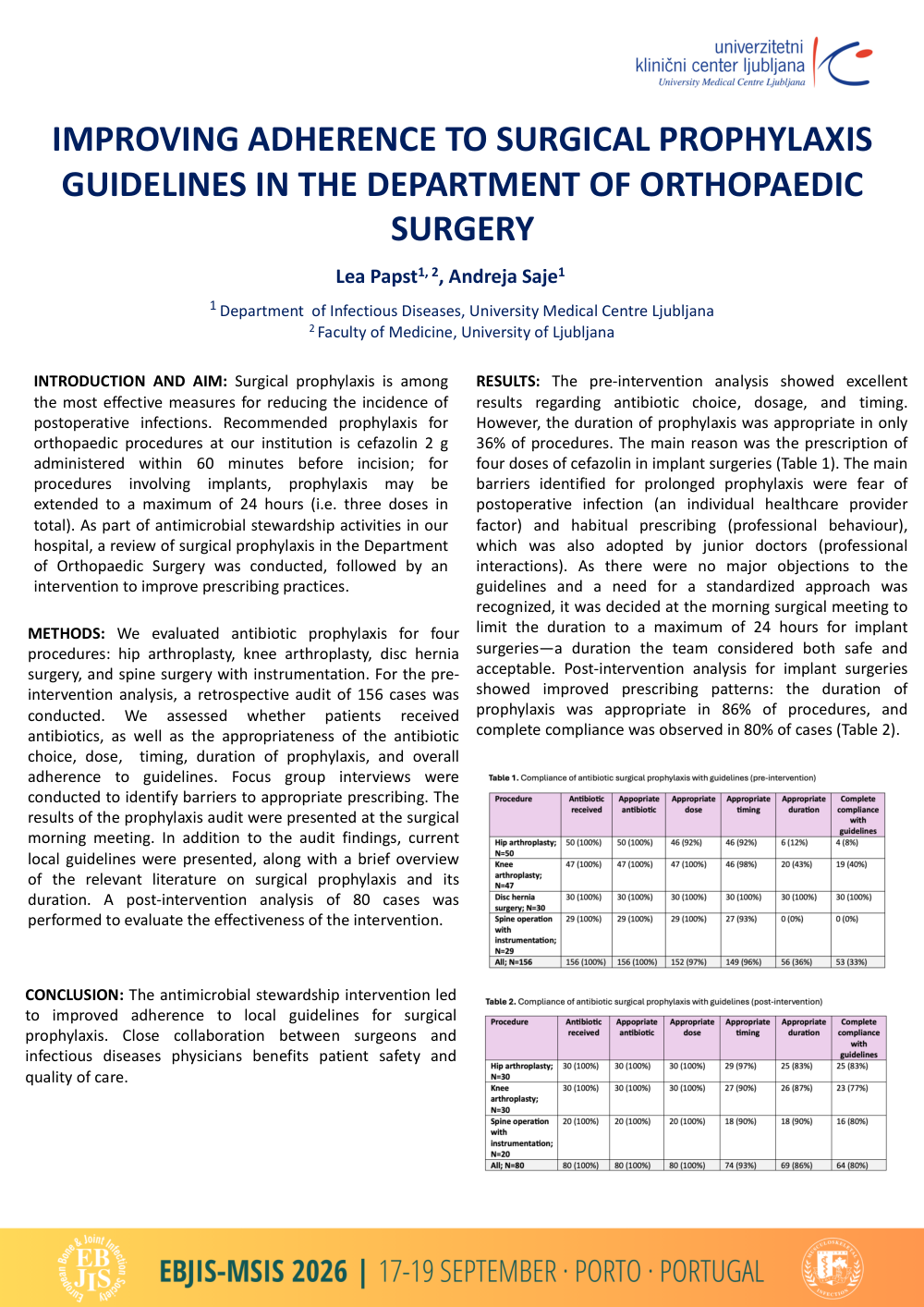
The pre-intervention analysis showed excellent results regarding antibiotic choice, dosage, and timing. However, the duration of prophylaxis was appropriate in only 36% of procedures. The main reason was the prescription of four doses of cefazolin in implant surgeries (Table 1). The main barriers identified for prolonged prophylaxis were fear of postoperative infection (an individual healthcare provider factor) and habitual prescribing (professional behaviour), which was also adopted by junior doctors (professional interactions). As there were no major objections to the guidelines and a need for a standardized approach was recognized, it was decided at the morning surgical meeting to limit the duration to a maximum of 24 hours for implant surgeries—a duration the team considered both safe and acceptable. Post-intervention analysis for implant surgeries showed improved prescribing patterns: the duration of prophylaxis was appropriate in 86% of procedures, and complete compliance was observed in 80% of cases (Table 2).
Conclusion:
The antimicrobial stewardship intervention led to improved adherence to local guidelines for surgical prophylaxis. Close collaboration between surgeons and infectious diseases physicians benefits patient safety and quality of care.