99 posters, 2 videos, 5 audios, 13 topics, 7 sessions, 418 authors, 180 institutions
ePostersLive by SciGen Technologies S.A. All rights reserved.
The 21st Meeting of the Diabetic Foot Study Group 2026
24-26 September, 2026 | Florence, Italy

EP110
Topical Probiotics for Diabetic Foot Ulcers: A Comparative Case Report
Poster Presenter
Authors
Affiliations
Department of Biomedical and Experimental Sciences, University of Medicine, Tirana, Albania, Department of Internal Medicine, University Hospital of Trauma, Tirana, Albania, Department of Pharmacy, Faculty of Medical Sciences, Albanian University, Tirana, Albania, Department of Surgery, Shefqet Ndroqi University Hospital, Tirana, Albania, Department of Biomedical and Experimental Sciences, University of Medicine, Tirana, Albania
Part of Topic
Wound healing and outcome
Topical Probiotics for Diabetic Foot Ulcers: A Comparative Case Report
Eni Çelo, Aida Dama, Sokol Hasho, Leonard Deda
Background:
Diabetic foot ulcers (DFUs) are a common and serious complication of diabetes, often associated with delayed healing due to neuropathy, impaired microcirculation, and persistent inflammation. Recently, interest has grown in microbiome-based approaches, with topical probiotics emerging as a potential adjunctive strategy to improve wound healing.
Case Presentation:
We present the case of a 62-year-old man with a 5-year history of poorly controlled diabetes (HbA1c 8.7%), who developed two chronic diabetic foot ulcers over a period of approximately two months. One ulcer was located on the plantar surface of the left foot, while the second was at the lateral ankle region. Laboratory findings indicated systemic inflammation, including elevated C-reactive protein (13.9 mg/L) and leukocytosis.
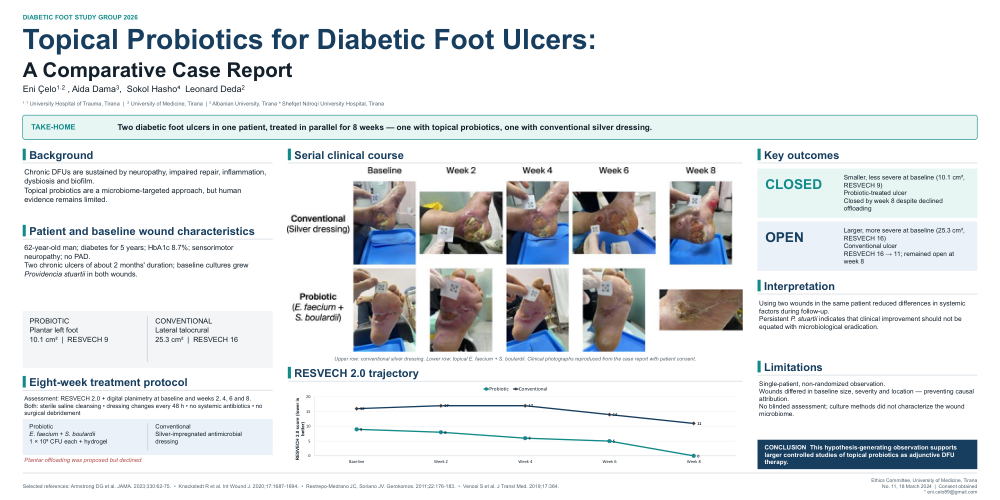
An intra-patient comparison was performed. One ulcer was treated with topical probiotics (Enterococcus faecium and Saccharomyces boulardii applied with hydrogel), while the other received standard care with silver-impregnated dressings. Both wounds were managed using the same cleansing protocol and followed for 8 weeks, with healing assessed using the RESVECH 2.0 scale. No systemic antibiotics or surgical debridement were used.
Results:
The ulcer treated with probiotics showed steady and clinically meaningful improvement, progressing from a RESVECH score of 9 at baseline to complete closure by week 8. In contrast, the ulcer receiving conventional treatment demonstrated slower and less pronounced healing, with the RESVECH score improving from 16 to 11 and the wound remaining partially open at the end of follow-up.
Conclusion:
This intra-patient comparison suggests that topical probiotics may support healing in diabetic foot ulcers, possibly by improving the local wound environment. Although these findings are encouraging, they are based on a single case and should be interpreted with caution. Larger, controlled studies are needed to further evaluate the role of probiotics in the management of DFUs.