99 posters, 2 videos, 5 audios, 13 topics, 7 sessions, 418 authors, 180 institutions
ePostersLive by SciGen Technologies S.A. All rights reserved.
The 21st Meeting of the Diabetic Foot Study Group 2026
24-26 September, 2026 | Florence, Italy

EP102
High Graft Take and Infection-Free Healing in Diabetic Foot Surgery: Experience with OEOd-enriched Dressings.
Poster Presenter
Part of Topic
Wound healing and outcome
High Graft Take and Infection-Free Healing in Diabetic Foot Surgery: Experience with OEOd-enriched Dressings.
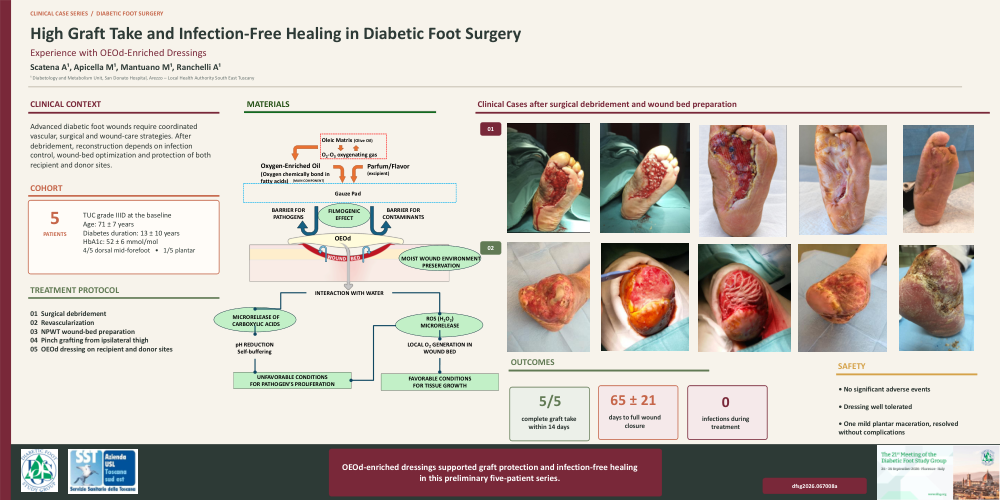
Chronic diabetic foot ulcers remain a clinical challenge, particularly in advanced stages requiring combined surgical and medical approaches. This case series evaluates the use of an Oxygen enriched oil-based (OEOd) enriched dressing in five diabetic patients presenting with Texas University Classification (TUC) grade IIID foot lesions.
All patients underwent a standardized multidisciplinary treatment protocol, including surgical debridement, revascularization procedures, and negative pressure wound therapy (NPWT) to optimize the wound bed. Definitive coverage was achieved with pinch grafting harvested from the ipsilateral thigh. The OEOd-enriched dressing was applied both to the graft recipient sites and to the donor sites.
The mean age of the patients was 71 ± 7 years, with a mean diabetes duration of 13 ± 10 years. Mean glycated hemoglobin (HbA1c) was 52 ± 6 mmol/mol. Lesions were located on the dorsal mid-forefoot in four cases and on the plantar surface in one case.
Complete graft take was observed in all five patients within the first 14 days. Full wound closure was achieved in a mean time of 65 ± 21 days. No infections were recorded during the treatment period. The dressing was well tolerated, with no significant adverse events reported. A mild maceration was observed in the patient with a plantar lesion, which resolved without complications.
These preliminary findings suggest that OEOd-impregnated dressings may represent a safe and effective adjunct in the management of complex diabetic foot wounds treated with pinch grafting. The absence of infection and the high rate of graft take support a potential role in enhancing wound healing and protecting both recipient and donor sites. Further studies with larger cohorts are warranted to confirm these results and to better define the mechanisms underlying its clinical benefits.