180 posters, 53 videos, 29 audios, 5 topics, 304 authors, 182 institutions
ePostersLive by SciGen Technologies S.A. All rights reserved.
7th Commonwealth Chemistry Posters
24-25 June, 2026 | Online

P35
Transformation of agricultural waste into nutraceutical and pharmaceutical products with the aid of In-silico methods
Poster Presenter
Part of Topic
Good Health and Wellbeing (SDG 3)
Abstract
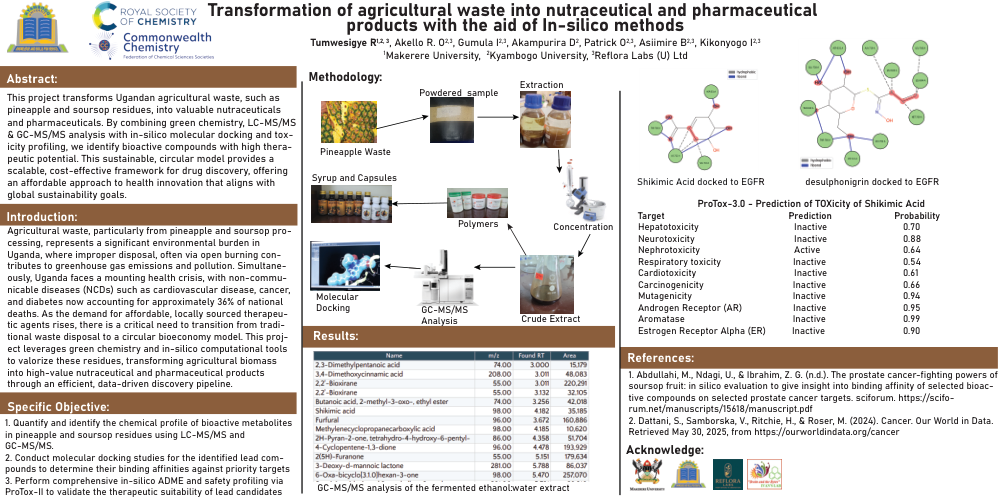
This project transforms Ugandan agricultural waste, such as pineapple and soursop residues, into valuable nutraceuticals and pharmaceuticals. By combining green chemistry, LC-MS/MS & GC-MS/MS analysis with in-silico molecular docking and toxicity profiling, we identify bioactive compounds with high therapeutic potential. This sustainable, circular model provides a scalable, cost-effective framework for drug discovery, offering an affordable approach to health innovation that aligns with global sustainability goals.
Introduction:
Agricultural waste, particularly from pineapple and soursop processing, represents a significant environmental burden in Uganda, where improper disposal—often via open burning contributes to greenhouse gas emissions and pollution. Simultaneously, Uganda faces a mounting health crisis, with non-communicable diseases (NCDs) such as cardiovascular disease, cancer, and diabetes now accounting for approximately 36% of national deaths. As the demand for affordable, locally sourced therapeutic agents rises, there is a critical need to transition from traditional waste disposal to a circular bioeconomy model. This project leverages green chemistry and in-silico computational tools to valorize these residues, transforming agricultural biomass into high-value nutraceutical and pharmaceutical products through an efficient, data-driven discovery pipeline.
Objectives:
1. Quantify and identify the chemical profile of bioactive metabolites in pineapple and soursop residues using LC-MS/MS and GC-MS/MS.
2. Conduct molecular docking studies for the identified lead compounds to determine their binding affinities against priority targets
3. Perform comprehensive in-silico ADME and safety profiling via ProTox-II to validate the therapeutic suitability of lead candidates